Atami Cocos Substrate

Atami Cocos Substrate

Atami Cocos Substrate is a high quality growing medium comprised of coco fibres extracted from the mesocarp of the coconut. It is a 100% natural product and designed so that it can be used immediately.

The Atami Cocos Substrate is unique in the fact that it is a coco with light fertiliser included, sufficient enough for the 1st week of plant growth. The buffering ensures the grower has optimum control of pH levels. After the first week you can add water with liquid fertilisers and stimulators to gain optimal growing results. Because of the structure of coco, it can store nutrients that are continually available for the plant.

Cocos Substrate is produced under controlled conditions, which is an assurance of quality and offers the ability to use it over and over again after each growing cycle. It can absorb plenty of water in a short period of time and can also deliver water rapidly and abundantly.


The roots also have plenty of available oxygen, which keeps them active. Despite the absence of residual water, there is always enough humidity for the plant.

Coco substrate is light and stable and is one of the best mediums for providing oxygen to the roots of the growing plants. Atami coco substrates are internationally certified by RHP, a foundation whose aim is to optimize the quality of growing mediums.

The coconut fibres have been washed, steamed and buffered to ensure that the substrate is free from any pathogens and unwanted elements, giving an optimum growing substrate that is suitable for both seeds and cuttings.

  • Airy structure
  • High quality coco
  • Optimal root development

Available in bags of 50L.

Produced in The Netherlands.

Specifications:

  •  Ingredients – coconut fibers, mineral lime, calcium nitrate and NPK fertilizer 11-27-8
  • pH 6.0
  • EC (1: 1.5 H2O VV) & lt; 1.75 mS / cm
  • Organic matter> 85%
  • Moisture content <85%
  • 50l
  • Air volume 20%

Black White Panda Plastic Sheet

Black/White Plastic Sheet

Black/White Plastic Sheet, or panda film as it is often called, is black on one side and a 90 percent reflective white on the other side allowing light to be reflected back to your plants where it belongs and cooling the ground under the groundsheet of plastic. Panda film is an inexpensive reflective material for grow room walls or green house barriers or floors. Panda plastic does not allow light through it and can be used to block out unwanted light.

Use Black/White Plastic Sheet to reflect light and also prevent mold and algae growth on walls. Panda Film can provide a light proof barrier for partitioning rooms, covering hydroponic grow media, waterproof flooring, making reservoir covers or a variety of other gardening uses.

BENEFITS:

• Long lasting in exposed sunlight.

• Good general purpose exterior covering sheet.

SPECS:

• Blended LDPE material (Low-density polyethylene)

• UV stabilised.

• Reasonable tear and puncture resistance.

Thickness: 150 micron

Applications:

  • Structure covering ( ex: warehouse storage areas)
  • Growing system / storage privacy
  • Aquaponic float bed liner
  • Darkening and shading plants to prolong dormancy and promote flowering
  • Weed barrier for orchards and row crops
  • Greenhouse blackouts
  • Overwinter protection

Designed with a black side and a white side, this strong, waterproof blackout film is uniquely suited to applications such as weed control, greenhouse blackout, indoor growing tents, overwinter plant protection, and privacy.

Use to line growing areas or cover ground around plants with the black side down. Deprive weeds of sunlight while reflecting ambient light back onto the plants.

EazyPlug Plugs

EazyPlug Plugs

EazyPlug:

EazyPlug has, with its organic materials and our special way of bonding, a predetermined pH and EC value and a fixed air-to-water ratio. The EazyPlug is very easy to use. Just make sure that the plug always can drain the excess water and you cannot overwater it. Because the growing conditions are always optimal, the EazyPlug creates a very fast and powerful rooting and germination.

Germinating seeds

Fully moisten the plug and put your seed in the seed hole. Put a thin layer of fine coco coir on top of the plug (optional) and spray thoroughly with water. Make sure the plug can drain excess water and put it away in a humid and warm environment. Then wait to see the miracle happening. It is that simple!

Strike cuttings

Fully moisten the plug and put your cutting all the way into the cutting hole. Make sure the EazyPlug can drain excess water and put it away in a humid and warm environment. No rooting gel or powder is necessary.

Easy to transplant

The Eazy Plug will always remain firmly bonded together as a whole. This minimizes the risk on root damage during sorting, transplanting or replanting, thus preventing the plant from diseases.

Limitless shelf life

The Eazy Plug is supplied dried, making it clean and lightweight, with limitless shelf life and no risk of molds. It takes water back up very easily and quickly, retaining all of its former characteristics.

Eazy Plug Characteristics

Model : square plug
Air-to-water ratio : 20-80
Size : 3.5 x 3.5 x 3.0 cm
EC : 1.0 *
pH : 5.8 *
Volume : 0.035 L
Weight dried : 3 gr

Features

• Self regulating
• Easy to control
• Air pruning for substantial enlargement hair root mass
• Suitable for gradual drier cultivation

Compatibility

With all known growing media, like Rock Wool, coir pith, black and white
peat, garden soil, potting soil, soil-less mixes, bark fines and wood
mulch, sand and grit, wood fibers, perlite, pumice, clay and
vermiculite.

Employability

In hydroponic systems like eb&flow, drip-feed (recovery and nonrecovery), nutrient film technique, wicksystems, floating platforms,
deep water culture, aquaponic systems, dry hydroponics soil (indoor and outdoor)

Re-moistening time when completely dehydrated

Pouring from above < 10 seconds
Immerge < 10 seconds
Drip-feed – depends on the ratio
Watering from below < 45 seconds

Composting

100% in normal composting conditions, no industrial composting necessary.
Declared: bonding of components has no discernible effect on compostability.

Safety

Declared: material meets safety requirements of REACH.

Toxicity

Declared: non-toxic.

Denature after cultivation

Plug contains cutting stem and callus and can, in potency, contain a regenerative capacity and needs to be denatured by either a strong
acid or base, concentrated inorganic salts, organic solvents (alcohol or chloroform), radiation or heat.

How to strike cuttings with Eazy Plug

Step 1: Moisten the Eazy Plug
Allow the Eazy Plugs to fully suck up water with a pH of 5.8.
Let it drain out excess water. Do not squeeze out or dry the plugs. Eazy Plugs are self-regulating and will only hold the water they need for an optimum moisture level and an optimum air-to-water ratio. The plug will feel much heavier than Rock-Wool, but that’s normal.

Step 2: Take cutting 
For a more detailed explanation of taking cuttings click here.
Cut diagonally at a 45 degree angle just below a node or stem swelling, making sure to keep at least 3 nodes above your intersection.
Remove all but a couple of leaves. Scrape a little of the outer layer at the bottom of the cutting, but not all around. Cut off ⅓ of the top of remaining big leaves.

Step 3: Root stimulator
If you want to make use of a rooting powder (for example Rhizopon), dip the base of your fresh cut cutting into the rooting powder.

Step 4: Insertion in Eazy Plug
Insert the cutting into the Eazy Plug cutting hole. Make sure to insert it deeply enough, completely to the bottom of the cutting hole.

Step 5: Put into propagator
Put the tray with Eazy Plug into a propagator.
Close the lid of the propagator and shut any present air vents to keep the humidity inside the system.

Step 6: Remoistening and fresh air
Only remoisten the Eazy Plug after 3 days and keep on doing that every 3 days until the first appearance of roots.
Briefly open the propagator every day for a little fresh air.
Open the air vents slightly at the earliest after 4-5 days. Humidity should remain above 80%, as too much loss of humidity can seriously effect your success rate.

Step 7: Assure drainage of excess water
Make sure Eazy Plug is able to drain excess water at all times, so it can always self-regulate the correct amount of moisture. Never let the bottom of the Eazy Plug touch water, as the moisture absorption of Eazy Plug is exceptionally good and the Eazy Plug will quickly become too wet, which will have a negative effect on the rate of success.

Step 8: Open air vents
After the first roots have developed, you can gradually open the air vents further in order to acclimate the cutting to a less humid environment.

Step 9: Transplant
In 7-9 days from start your cutting should have grown its roots throughout the Eazy Plug and it is time to transplant them.

Conditions for developing roots:
1. Temperature: The optimum soil temperature for striking roots is 22º Celsius. Above 23º Celsius, you must consider a rise in failure rate.
2. RH (humidity): RH of 80-95% is perfect. As the cutting needs its energy for striking roots, the moisture level of leaves and stem should remain intact.
3. Light: In the first few days the cutting will form callus, from which the roots will start to grow. In this phase the cutting only needs tempered light with a broad spectrum (regular assimilation light). After the development of roots the amount of light can be gradually increased.

Lumii Black 600w Electronic Kit

Lumii Black 600w Electronic Kit

The Lumii Black 600w Electronic Kit is supplied with the Lumii BLACK 600w Electronic Ballast, Lumii Black 600w Dual Spectrum lamp and the Lumii Black reflector.

The ballast features both a dim and a boost functions enabling you to control the light output from your lamp to your plants. It can be dimmed down to both 250w and 400w and also has a ‘super-lumens’ boost option (600w+Boost) which is on average a 10% increase in output.

This Lumii Black Lamp is a 600w Dual Spectrum HPS Lamp. It is an essential for stimulating enhanced flowering as it gives out 88,000 Lumens and lasts for up to 18,000 hours.

A Dutch Barn-Styled, Euro Reflector the LUMii Black Reflector does exactly what it should. Complete with lamp holder, mounting holes to attach rope ratchets to,  and a 4m length of kettle-plug cord.

We recommend using a 600w lamp for 600w dimmer settings, a 400w lamp for 400w dimmer settings and a 250w lamp for 250w dimmer settings.

Never boost a lower wattage lamp to a higher lamp setting.

YoYo Plant Trainer

YoYo Plant Trainer

The YoYo Plant Trainer are superb for separating and spreading out your plant stems. Attach the yoyo to your tent-frame or grow-room wall and then pull out the angled hook and clip it around the plant-stem. The gentle tension in the yoyo will then pull the plant-stem out. Great for getting plants to open out for increased yields!

  • YoYo Plant Trainer – one of our most popular plant-training / support devices
  • Contains a 1.2m long nylon line with an angled hook for clipping around a stem
  • Light spring tension in the yo-yo gently pulls the stem toward the reel
  • Alternatively, you can insert the included plastic stopper to keep the line at a static length.
  • Attach yo-yo to your tent-fame or grow-room wall and gently open your plant out to receive more of the available light
  • Helps you to make the most of your grow-space and light
  • Re-useable many times

The YoYo Plant Trainer Contains:

1 x YoYo Plant Trainer

How the YoYo Plant Trainer Works:

The yo-yo plant trainer consists of a 1.2 metre long nylon line (similar to fishing line) which is wound onto a lightly sprung reel inside the yo-yo’s housing. An angled hook is attached to the end of the nylon line for clipping around a plant-stem and there is hanging hook on the yo-yo reel housing for attaching to a grow-tent frame or your grow-room wall (via a cup-hook or similar). The tension is fairly consistent over the 1.2 metres of the travel but inevitably there is slightly more tension on the line at full extension than there is when only a few centimetres has been pulled out.

Using the Yo-Yo Plant Trainer

Yo-Yo plant trainers are mainly for use on mature plants as they reach the end of the vegetative phase and also especially during flowering/fruiting. Plant-stems on young plants are usually too thin and delicate for this type of training. During the flowering/fruiting time, plants tend to grow upwards but not outwards, leading to the stems getting bunched together. By opening out the plant, each stem will get more light lower down, encouraging more flower or fruiting sites.

Attach the yo-yo body to the outside of your grow-space (i.e to your grow-tent or grow-room wall) via the clip. Pull the hook out and clip it around the plant-stem. The plant-stem will now be gently pulled towards the yo-yo body, opening the plant out. Use as many yo-yo’s as necessary, pulling in different directions, to open out your plant to receive more light and increase the number of flowering or fruiting sites which will eventually increase yields.

If you are lucky enough to have stems bowing under the weight of your crop at the end of the flowering or fruiting stage then yo-yo’s can be attached to the ceiling / tent-roof frame, to provide upwards support to the plant-stems. This will help prevent stems from bowing downwards away from the light and also from breaking under the weight of the produce!

hydroponic.co.za

AC Infinity – Atami – Athena – AutoPot – Because Nature – BioBizz – Bionova – BluMat – BlueLab – Cosmocel – EHG – Dynomyco – Freedom Farms – Garden HighPro – Garland – Grotek – Jiffy – Sprout – TerpLoc – Terra Aquatica

Walk-in Shop: BRACKENFELL in Cape Town

GrowDown Sponsor Banner or Sidebar

Shop Categories…

New Arrivals Home Div
hydroponic.co.za

Affiliates

NEW FGA Logo Grey Background

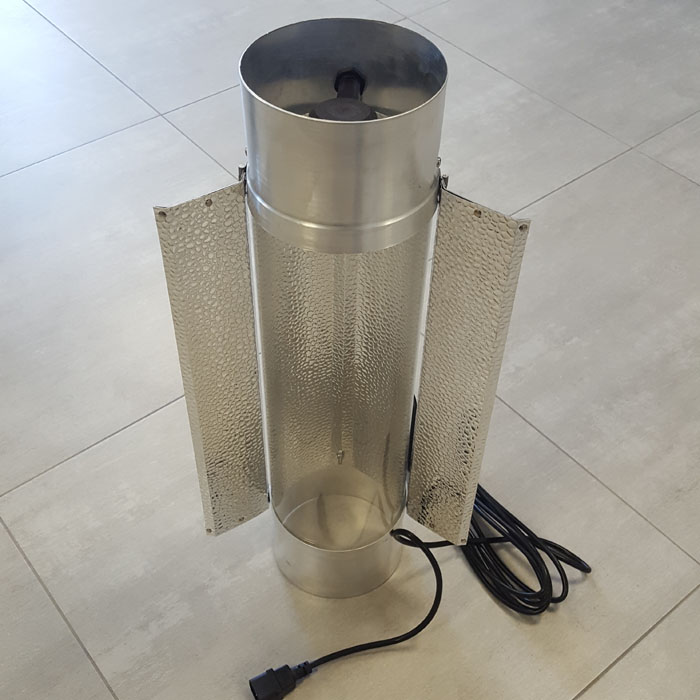
Lumii Black Reflector

Lumii Black Reflector

The Lumii Black Reflector is a budget reflector, made to the highest standard, very popular with beginners and commercial growers.

Alternative reflectors -> HERE


Revised Dutch barn design utilising a V-groove directly above the lamp to help eliminate hotspots.

The  Lumii Black Reflector has a dimpled aluminium finish for even light distribution, revised reflective angles, curved corners for safety and a parabolic fold above the lamp for a more even spread of light. It’s open ended design also makes it suitable for low mounting heights. There really is no cheaper way of getting this much valuable light to your plants.

Features an E40 ceramic lamp holder and 4m of kettle-plugged cord and is pre-assembled.

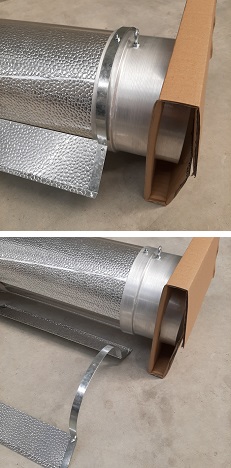
Comes covered in plastic to prevent scratches on reflector. Please remove protective plastic before use.

Ideal for 250w, 400w and 600w HID lamps. Ballast is required to fire HID Lamps.

Can also use E40 CFL’s. No ballast required for CFL’s to fire lamp.

Size: 47cm x 47cm

Garland Value Square Tray 60cm

Garland Value Square Tray 60cm

The Garland Value Square Tray 60cm is impact resistant and light as well as long life and can be planted directly into or used with seed trays and pots. If needed, add holes for drainage. It is also great to use as part of a gravity fed system with the AutoPot AQUAvalve and large pots.

This tough, injection moulded tray has a number of valuable applications. With a depth of 7cm, and a 25 Litre internal capacity it is ideally sized for standard greenhouse staging.

Made from recycled polypropylene, this item is available in Budget Black.

Size Check: 60cm  Long, 60cm  Wide, 7cm High External

Garland Standard Propagator

Garland Standard Propagator

The Garland Standard Propagator is made from recycled and recyclable plastic. Grow healthy plants from seed in your home or greenhouse.

Suitable for striking cuttings. Grow like the professionals.
Instructions for use:

  1. Fill each cell with seed and cutting compost
  2. Water well with a fine spray
  3. Place seed(s) or Cutting in each cell and cover with a layer of compost
  4. For faster germination place inserts into the seed tray and cover with the propagator lid
  5. As plants grow allow ventilation by propping open one side of the lid by approximately 1cm
  6. Place in a bright position but not in direct sun light

Never allow compost to dry out, keep moist at all time

Size Check: 37cm  Long, 23.5cm  Wide, 13.5cm  High

Microscope Loupe 40X

The Microscope Loupe 40X is ideal for identifying insect pests and plant diseases. Provides a sharp, clear, magnified image without distortion and features a swing-away protective lens cover that also serves as a handle. Loupes also work really well when trying to examine trichome colouring up close.

Get targeted, optimal illumination with the Microscope Loupe 40X. The Loupe works by the light of an intensely bright LED bulbs, getting you 40x closer without eye strain.

Features:
• Easily identify pests and diseases, allowing faster prevention and less damage to plants
• Provides targeted, optimal illumination
• Compact and lightweight design
• Super bright LED bulbs to illuminate specimens
• 3 LED’s: switch for either bright white light or UV light
• Includes button cell batteries and a sturdy carry case

Size: 3.3cm wide x 7cm long

Many enthusiasts find that using a magnifying loupe while checking up on plants is the quickest and easiest way to quickly zoom in on points of interest. Unlike other types of handheld magnifiers, a loupe does not need to touch the object that is being looked at and observations can be made quickly and effortlessly. This a great benefit when already in an uncomfortable position between your planting and will save a lot of frustration. If anything if interest is discovered while inspecting, samples can be taken that can be examined in more detail in a more suitable location.


Bluelab Truncheon Nutrient Meter

Bluelab Truncheon Nutrient Meter

The Bluelab Truncheon Nutrient Meter is one of the World’s favourite conductivity meter. Simply brilliant, brilliantly simple! Easy to use and Fast! Using the Bluelab Truncheon® Nutrient Meter is the fastest and easiest way to measure the conductivity!

When growing with a hydroponic solution it is essential to KNOW what the strength of the solution is before feeding your plants AND while they are growing. If the conductivity reading is too low, your plants may not be getting enough nutrients. If the conductivity reading is too high, plants can dehydrate. Understanding the conductivity of the nutrient solution takes the guesswork out of feeding plants.

To take a reading of your solution – simply place the probe head into the solution and the reading is indicated by the flashing lights. Calibration of the Truncheon® Nutrient Meter is not required.

The only maintenance it requires is cleaning the probe and changing the batteries. ‘The instrument is only as accurate as the probe is clean’ – easy probe cleaning and a quick test is all you need to do to keep the Truncheon Meter operating perfectly for years!

Main Features

  • EC (0.2 – 3.6), CF (2 – 36) and ppm scales (TDS and 700 scale)
  • Fully waterproof
  • No calibration required
  • Auto sense on and off
  • No external switches or adjustable buttons
  • Battery life minimum 1 year (or shelf life of battery)

Meter length: 40.7cm

Bluelab 5 year guarantee
5 year guarantee for Bluelab Truncheon® Nutrient Meter
(Proof of purchase is required)

Posted on

DWC-Hybrid Kit Instructions

Deep Water Hydroponics system

DWC-Hybrid Usage Instructions

Our DWC system is a hybrid system that combines two important hydroponic technologies: Hydro (drip) and DWC (roots immersed and suspended).

This system provides advantages of both techniques:

  1. Easy installation, usage and maintenance.
  2. Substantially shortens growth and flowering cycles compared to traditional systems, giving you more harvests per year!
  3. Continuous feeding and watering to roots from day 1.
  4. Extra Oxygenation of nutrient solution using the air pump & air-stone.
  5. Water is always moving. This avoids the formation of fungi, algae, mold, etc.
  6. No waste of water or nutrients. Clay substrate is also reusable.

The kit includes:

  • 45 Liter Tank base (reservoir) with water level tube
  • Lid with hole and plug for easier access to water in order to check pH
  • A submersible pump & feeding manifold
  • Air Pump & Air Stone
  • Net Pots (mesh baskets) ( Either 2 or 4 pots, depending on model )
  • LECA (clay pellets)
  • Nutrient Kit (A, B & MKP)
  • Ph Test Kit
  • Ph Up Solution
  • Ph Down Solution
  • 3 x 5lt Containers to store your concentrated nutrients.

What do you do with this kit?

  1. Find suitable spot to place your system – take temperature and available light (for your plants) into consideration, as well as being able to work around your system comfortably & safely as your plants grow. The temperature of the water in the reservoir should also remain at close to 18-22C, to avoid pathogens that cause root-rot.
  2. Switch the outlet-pipe around to the outside of the reservoir. The end-cap could be pulled off to allow easy drainage into a bucket when nutrient solution needs to be replaced. A water valve may optionally be attached to the outlet (Not included in kit)
    1. DWC Outlet position
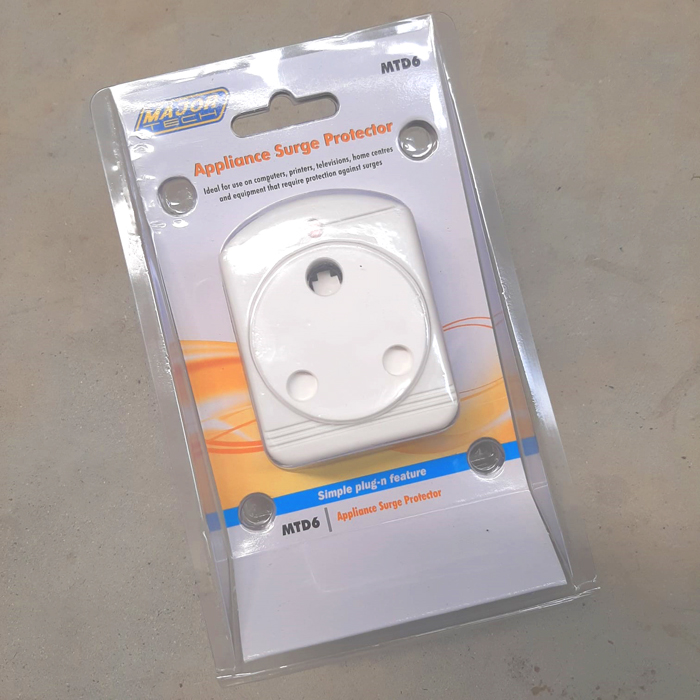
  3. Cut off 2 pin plug from submersible water pump. Thread through grommet next to Air Pipe (outwards) and connect to 3 pin plug ( Not included ).
  4. Fill the reservoir system with about 40 liters of water and add Nutrients (as per Hortimix Nutrient Instructions)
  5. Check pH of water. Average pH is about 6 (for more info https://hydroponic.co.za/hydroponics-quickstart/plant-phecppm/)
  6. Connect Air-stone to clear tubing in reservoir and submerse in water.
  7. Connect the other end of the clear tubing to the air pump, which is to be kept outside of the water reservoir, away from contact with any water!
  8. Connect the submersible water pump to the watering manifold using only the straight, basic fitting. (Do not use the water pump’s venturi fitting or its clear air tubing)
  9. Place lid on reservoir.
  10. Rinse LECA (clay pellets) in water before first use – until run-off is clear.
  11. When adding new plants (usually seedlings), gently rinse off potting medium from their roots with water, before planting into net pots, using your LECA (clay pellets)
  12. Connect pumps (water & air pump) to power and switch on. Make sure plant roots (NOT stem bases) are adequately covered by water flow once pump is on.
  13. Never let your system or plant roots run dry !

Start Growing!

A new mix of slightly stronger nutrient solution should be made once every week (or two, if lazy). You can use what’s left of the old solution to feed lawns or other plants. (Mix new batches according to Hortimix Nutrient Instructions)

You will soon be able to judge how much water your plants will use in a week, and may adjust your new mixes accordingly – but it’s ALWAYS better to have a little more solution in your system than what appears to be needed.

You may also decide to increase the water levels in your system as time goes by – bigger plants will have larger root systems suspended in the reservoir, and will use more water per week than small plants.

Sowing Tray Without Holes

Sowing Tray Without Holes

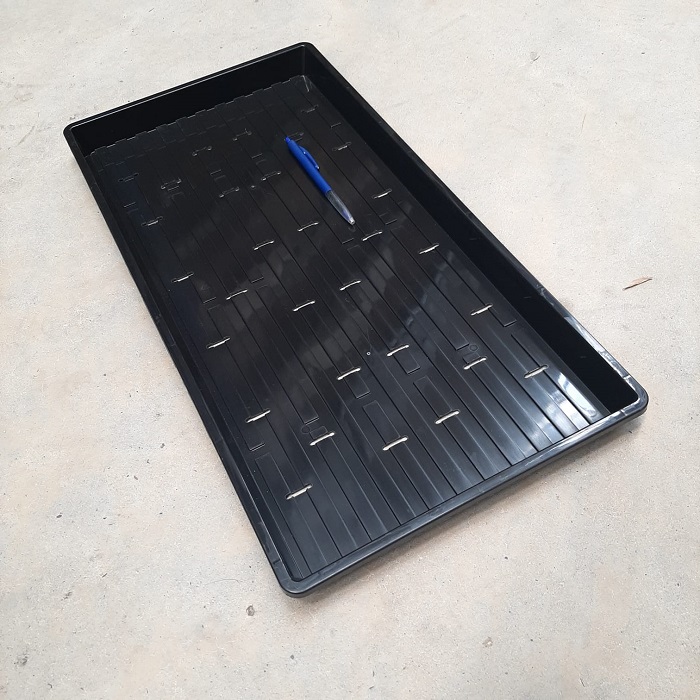
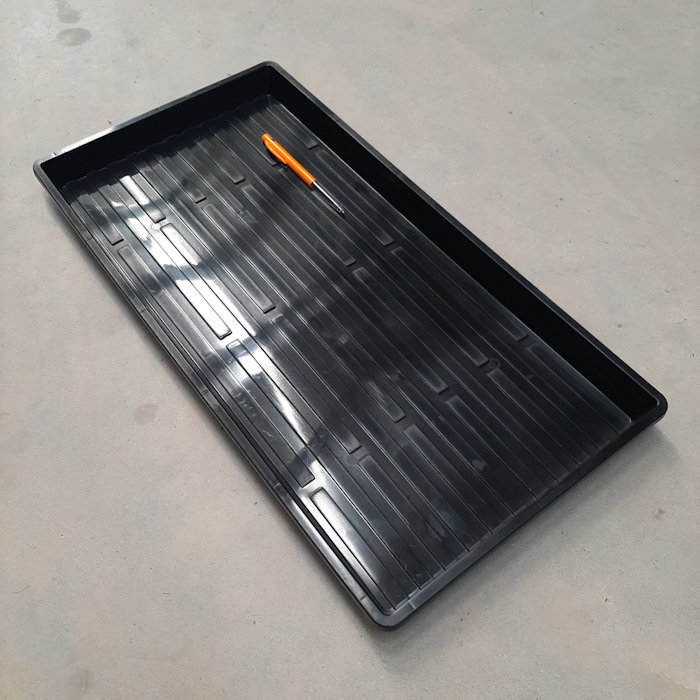
This multi-purpose Sowing Tray Without Holes can be used for cultivating microgreens and sprouting seeds in a range of grow medium. Ideal for placing multiple small seedling trays inside or can be used for water catchment for larger pots.

Size: 35cm x 48cm x 7cm

How to germinate seeds

Each type of seed has slightly different growing requirements, but the basics are the same:

  1. Use shallow containers (5 to 8cm deep) with drainage holes. It is easiest to monitor moisture in containers that are no more than  8cm deep and they require less growing medium!
  2. Use a lightweight seedling mix. These mixes are made primarily of ground peat moss or with coco coir as a base, and have sometimes been sterilized, so they are less apt to contain weed seeds, fungi, and bacteria that may hamper growth than garden soil. These mixes also provide good drainage, providing both the aeration and moisture seedlings need. Avoid using garden soil, as it won’t provide sufficient aeration and can introduce disease-causing organisms.
  3. Moisten the seedling mix before placing it in containers, like the Sowing Tray Without Holes. If you can squeeze a handful of the mix and water comes out, it is too wet and you’ll need to add more of the dry mix. The ideal moisture level feels like a well-wrung sponge.
  4. Fill the containers with moistened seedling mix to about 1.5 to 2.5cm  below the rim of the container. Rap the container against the counter top to settle the mix.
  5. Follow the recommended planting depth on the seed packet when sowing seeds. This is generally 1-1/2 to 2 times the width of the seed. However some seeds need light to germinate and must be “surface sown” meaning they should simply pressed into the surface of the potting mix and not be covered at all; the seed packet will note if this is the case.
  6. Water seeds after planting using the mist setting on a spray bottle to avoid dislodging seeds with a strong stream of water. Check daily to make sure the mix is stays even moist, but not soggy. Seeds must stay moist in order to germinate properly.
  7. If the air in your room is very dry, you can maintain adequate moisture for germination by creating a tent over the pots or flats with clear plastic wrap. Prop the plastic wrap off the surface of the planting mix using Popsicle sticks or other ‘posts’ so seedlings don’t stick to it. Remove any coverings gradually as germination begins.
  8. Most seeds germinate best in warm conditions. Although average room temperature (21°C) is generally adequate for most seed germination, you’ll get faster and more consistent germination if you place newly seeded containers in a warm spot (21 to 26 degrees C) or on top of a heat mat (available from garden stores). With the right conditions, most garden seeds should germinate in 7 to 14 days (unless otherwise noted on the seed packet). Once seeds have germinated and produced their first set of true leaves (the very first you see are called seed leaves, and all that grow after that are true leaves), move containers of seedlings off the heat mats.
  9. Good light is essential. Once you see the first signs of germination, move the seed trays to a light-filled area. Seedlings need full sun from a south- or west-facing window or, even better, CFL lights positioned 5cm – 15cm above the foliage. Use a timer to keep fluorescent lights on for 12 to 16 hours a day. Suspend the light fixtures so that you can move them up as your plants grow, keeping them a consistent height above the tops of the seedlings. Leggy or pale green seedlings are an indication that plants need more light. If your seedlings are growing on a windowsill, rotate containers regularly to keep plants from reaching toward the light source.
  10. Keep the soil moist but never wet, as this encourages rot. At first, lightly mist the soil. Once seedlings emerge, place the containers in a tray and water from the bottom to encourage deep root development. Check daily and do not let the soil mix dry out.
  11. Wait to fertilize until the seedlings’ true leaves (the second set) appear. Then use a weak solution which will help the seedlings develop a strong root system.
  12. When seedlings have one to three sets of true leaves and are about 5cm tall, transplant them to a deeper container for growing on until planting time.

Get your Sowing Tray Without Holes today!

Green House Powder Feeding – Grow

Green House Powder Feeding - Grow

Green House Powder Feeding – Grow is specifically designed  for the vegetative growth-stage of all plants.

PLEASE USE IN CONJUNCTION WITH GREEN HOUSE POWDER FEEDING CALCIUM FOR OPTIMAL RESULTS.

  • Its formula provides optimum development throughout the growth-stage to obtain greener, stronger and more resistant plants.
  • Grow faster, greener and more vigorous than ever.
  • Ideal for the production of cuttings.
  • The easy assimilation of nutrients and the high Nitrogen content provides plants with a more robust and branched structure.
  • The great thickness of the leaves accumulates more reserves, stimulating rapid rooting of cuttings.
  • Green House Powder Feeding can be used on every medium.

Ideal for:

  • Lettuce
  • Ficus Benjamina
  • Azaleas
  • Erica Carnea
  • All kinds of young and herbaceous plants

Packet Sizes: 1Kg and 500g

The feeding schedule is slightly different and if using anything than soil we recommend using a PH- and EC-meter in order to achieve the desired values and have full control over your feeding solution.

Easy Grower

If you grow on pre-fertilized soil we recommend starting using Powder Feeding 2-4 weeks after planting the seeds and to start with a mild solution (0.25g per Liter).

During the vegetative stage you can increase the feeding up to 0.5g per Liter.
With the beginning of the flowering stage you should slowly increase the amount of Powder Feeding until you reach 1g per Liter.

Following this schedule, there should usually be no problem and growers will achieve a good yield.

Experienced Grower

Experienced growers usually measure their feeding solution to provide the plants with the exact amount of nutrients and the correct pH value of the solution.

Whether you grow in coco, hydroponics or aeroponics – with all of these systems you should measure your pH and EC values.

When using a pH and EC meter you can optimize your growing and achieve much better results.

Steps of mixing nutrient solution:

1. a) Check pH and EC value of the water and make sure the temperature is about 18-22 degrees Celsius. You should also check if your water contains enough Calcium.

1. b) If your EC is 0,0 (using RO or rain water) you need to add Calcium to your water before adding Powder Feeding. Make sure your EC rises up to 0.3-0.4 EC

2. Add Powder Feeding and mix well for 2-3 minutes, and then measure the EC value. If necessary repeat until you reach the desired value.

3. When you reached the desired EC value, wait for 15-30 min.

4. Then measure the PH and if necessary adjust it using PH up or PH down – mix good for 2-3 minutes and wait again 15-30 minutes before measuring.

5. When you reached the desired values, feed your plants.

To keep every dose accurate our 10 gr. dosage spoon is INCLUDED!
You can find our recommended feeding schedule here:

COMPOSITION

N-P-K-Mg: 24+6+12+(1.2)

CONCENTRATION OF ELEMENTS

  • 24%      N Total Nitrogen
  • 13%      NS Nitrogen Nitrate
  • 11%      NA Nitrogen Ammoniacal
  • 6%        P2O5 Nitrogen Phosphorus
  • 12%      K2O Soluble Potassium
  • 2.0%     MgO Soluble Magnesium
  • 0.02%   B Soluble Boron
  • 0.04%   Cu Soluble Copper (as Chelate form EDTA)
  • 0.1%     Fe Soluble Iron (as Chelate form EDTA)
  • 0.05%   Mn Soluble Manganese (as Chelate from EDTA)
  • 0.01%   Mo Soluble Molybdenum
  • 0.01%   Zn Soluble Zinc (as Chelate from EDTA)

DILUTION PROPORTIONS

Concentration gr./Lt. 0.5 1 1.5 2
EC (mS) 1 1.4 2 2.6

These values are calculated starting from tap water at medium hardness with EC 0.0

Green House Powder Feeding – Hybrids

Green House Powder Feeding – Hybrids

Green House Powder Feeding – Hybrids is specifically designed for the growth and flowering stages of those plant varieties that originate from hybrid crosses with an intermediate flowering time, 8-9 weeks.

PLEASE USE IN CONJUNCTION WITH GREEN HOUSE POWDER FEEDING CALCIUM FOR OPTIMAL RESULTS.

  • Its formula provides carefully prepared macro and micro-elements in a balanced manner for all phases, growth and flowering.
  • Without adding other components throughout the cycle, nutrients are provided in the proper ratio for easy absorption, ideal for long flowering plants.
  • Green House Powder Feeding can be used on every medium.

Ideal for:

  • Cichorium
  • Asteraceae
  • Sun flowers
  • etc.

Packet Sizes: 1Kg & 500g

The feeding schedule is slightly different and if using anything other than soil we recommend using a PH- and EC-meter in order to achieve the desired values and have full control over your feeding solution.

Easy Grower

If you grow on pre-fertilized soil we recommend starting using Powder Feeding 2-4 weeks after planting the seeds and to start with a mild solution (0.25g per Liter).

During the vegetative stage you can increase the feeding up to 0.5g per Liter.
With the beginning of the flowering stage you should slowly increase the amount of Powder Feeding until you reach 1g per Liter.

Following this schedule, there should usually be no problem and growers will achieve a good yield.

Experienced Grower

Experienced growers usually measure their feeding solution to provide the plants with the exact amount of nutrients and the correct pH value of the solution.

Whether you grow in coco, hydroponics or aeroponics – with all of these systems you should measure your pH and EC values.

When using a pH and EC meter you can optimize your growing and achieve much better results.

Steps of mixing nutrient solution:

1. a) Check pH and EC value of the water and make sure the temperature is about 18-22 degrees Celsius. You should also check if your water contains enough Calcium.

1. b) If your EC is 0,0 (using RO or rain water) you need to add Calcium to your water before adding Powder Feeding. Make sure your EC rises up to 0.3-0.4 EC

2. Add Powder Feeding and mix well for 2-3 minutes, and then measure the EC value. If necessary repeat until you reach the desired value.

3. When you reached the desired EC value, wait for 15-30 min.

4. Then measure the PH and if necessary adjust it using PH up or PH down – mix good for 2-3 minutes and wait again 15-30 minutes before measuring.

5. When you reached the desired values, feed your plants.

To keep every dose accurate our 10 gr. dosage spoon is INCLUDED!
You can find our recommended feeding schedule here:

COMPOSITION

N-P-K-Mg: 15+7+22+(3.6)

CONCENTRATION OF ELEMENTS

  • 15%        N Total Nitrogen
  • 10%        NS Nitrogen Nitrate
  • 5%          NA Nitrogen Ammoniacal
  • 7%          P2O5 Nitrogen Phosphorus
  • 22%        K2O Soluble Potassium
  • 3.6%       Mg Soluble Magnesium (=1.2% Mg)
  • 0.03%     B Soluble Boron
  • 0.002%   Cu Soluble Copper (as Chelate form EDTA)
  • 0.12%     Fe Soluble Iron (as Chelate form EDTA)
  • 0.05%     Mn Soluble Manganese (as Chelate from EDTA)
  • 0.005%   Mo Soluble Molybdenum
  • 0.01%     Zn Soluble Zinc (as Chelate from EDTA)

DILUTION PROPORTIONS

Concentration gr./Lt. 0.5 1 1.5 2
EC (mS) 1 1.4 2 2.6

These values are calculated starting from tap water at medium hardness with EC 0.0