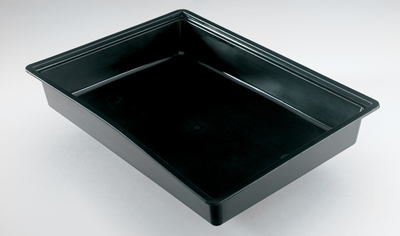
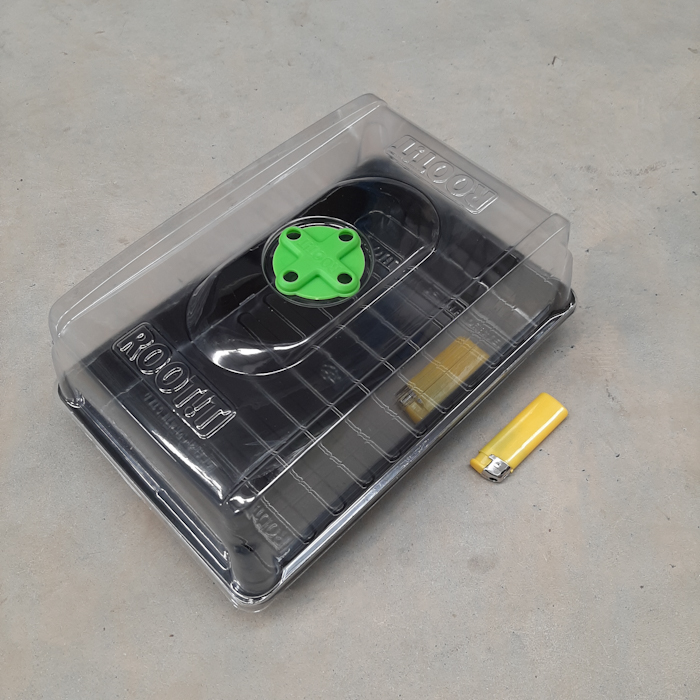
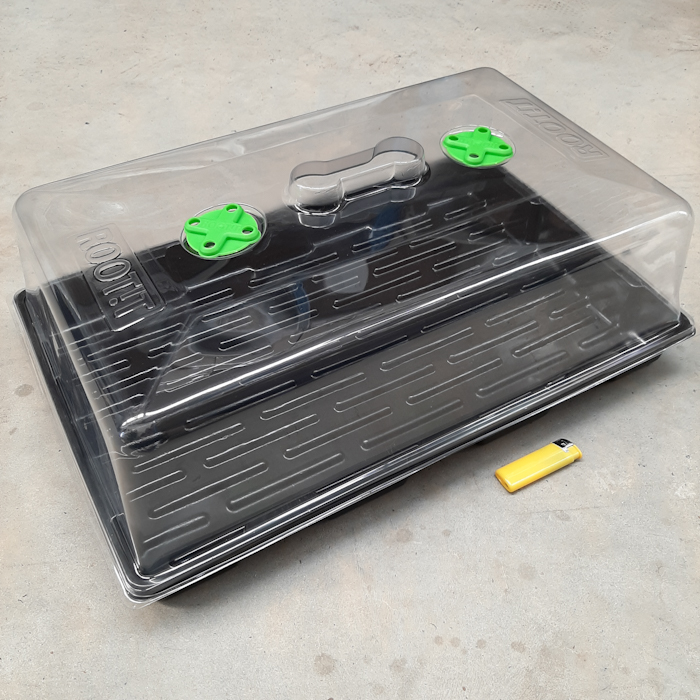
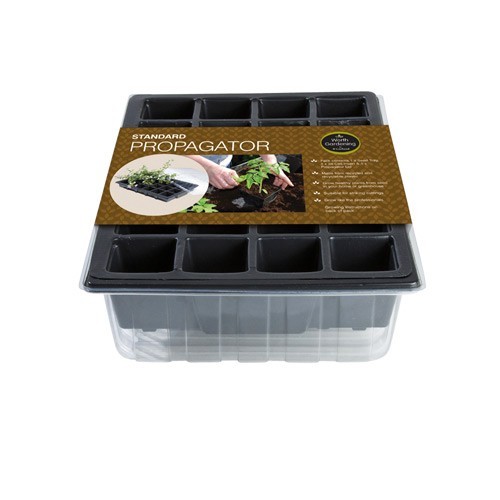
This multi-purpose Sowing Tray Without Holes can be used for cultivating microgreens and sprouting seeds in a range of grow medium. Ideal for placing multiple small seedling trays inside or can be used for water catchment for larger pots.
Size: 35cm x 48cm x 7cm
How to germinate seeds
Each type of seed has slightly different growing requirements, but the basics are the same:
Use shallow containers (5 to 8cm deep) with drainage holes. It is easiest to monitor moisture in containers that are no more than 8cm deep and they require less growing medium!
Use a lightweight seedling mix. These mixes are made primarily of ground peat moss or with coco coir as a base, and have sometimes been sterilized, so they are less apt to contain weed seeds, fungi, and bacteria that may hamper growth than garden soil. These mixes also provide good drainage, providing both the aeration and moisture seedlings need. Avoid using garden soil, as it won’t provide sufficient aeration and can introduce disease-causing organisms.
Moisten the seedling mix before placing it in containers, like the Sowing Tray Without Holes. If you can squeeze a handful of the mix and water comes out, it is too wet and you’ll need to add more of the dry mix. The ideal moisture level feels like a well-wrung sponge.
Fill the containers with moistened seedling mix to about 1.5 to 2.5cm below the rim of the container. Rap the container against the counter top to settle the mix.
Follow the recommended planting depth on the seed packet when sowing seeds. This is generally 1-1/2 to 2 times the width of the seed. However some seeds need light to germinate and must be “surface sown” meaning they should simply pressed into the surface of the potting mix and not be covered at all; the seed packet will note if this is the case.
Water seeds after planting using the mist setting on a spray bottle to avoid dislodging seeds with a strong stream of water. Check daily to make sure the mix is stays even moist, but not soggy. Seeds must stay moist in order to germinate properly.
If the air in your room is very dry, you can maintain adequate moisture for germination by creating a tent over the pots or flats with clear plastic wrap. Prop the plastic wrap off the surface of the planting mix using Popsicle sticks or other ‘posts’ so seedlings don’t stick to it. Remove any coverings gradually as germination begins.
Most seeds germinate best in warm conditions. Although average room temperature (21°C) is generally adequate for most seed germination, you’ll get faster and more consistent germination if you place newly seeded containers in a warm spot (21 to 26 degrees C) or on top of a heat mat (available from garden stores). With the right conditions, most garden seeds should germinate in 7 to 14 days (unless otherwise noted on the seed packet). Once seeds have germinated and produced their first set of true leaves (the very first you see are called seed leaves, and all that grow after that are true leaves), move containers of seedlings off the heat mats.
Good light is essential. Once you see the first signs of germination, move the seed trays to a light-filled area. Seedlings need full sun from a south- or west-facing window or, even better, CFL lights positioned 5cm – 15cm above the foliage. Use a timer to keep fluorescent lights on for 12 to 16 hours a day. Suspend the light fixtures so that you can move them up as your plants grow, keeping them a consistent height above the tops of the seedlings. Leggy or pale green seedlings are an indication that plants need more light. If your seedlings are growing on a windowsill, rotate containers regularly to keep plants from reaching toward the light source.
Keep the soil moist but never wet, as this encourages rot. At first, lightly mist the soil. Once seedlings emerge, place the containers in a tray and water from the bottom to encourage deep root development. Check daily and do not let the soil mix dry out.
Wait to fertilize until the seedlings’ true leaves (the second set) appear. Then use a weak solution which will help the seedlings develop a strong root system.
When seedlings have one to three sets of true leaves and are about 5cm tall, transplant them to a deeper container for growing on until planting time.
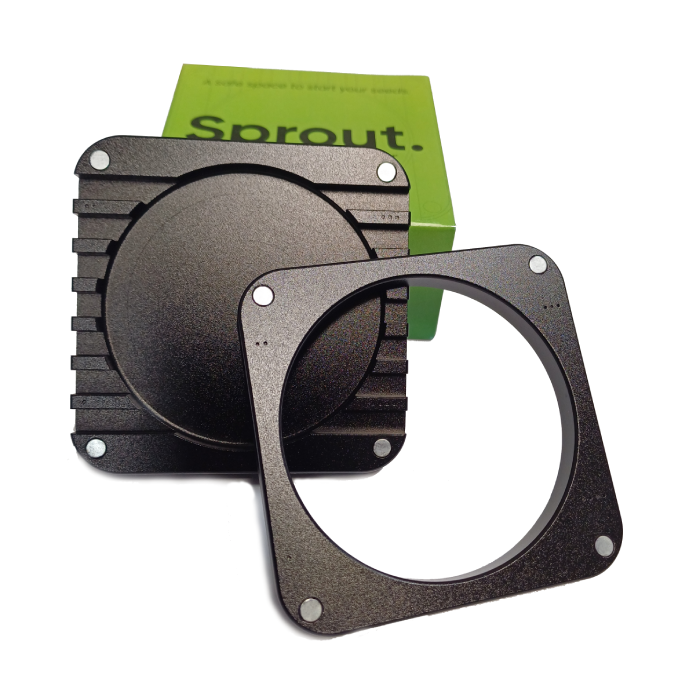
The Sprout Germinator Module Pack: 2 Handy extension plates that compliment and work with the Sprout Premium Seed Germinator. Use the Module Pack plates to:
Double up capacity with the Sprout Seed Germinator Module Pack – simply snap on the second seed tray to germinate twice as many seeds with your Sprout Seed Germinator at the same time. The 2nd tier will only be 1°C cooler than the 1st tier.
Bigger seeds? – no problem! – The Module Pack also incudes a spacer disk – snapping the spacer onto the Sprout allows seeds of up to 1cm to fit into the germination cavity.
The Sprout Premium Seed Germinator (Aurora+ Generation 3) is a premium seed germination system designed with advanced features to elevate your germination process. It is made from high-quality CNC-machined, hard-anodized aluminum, ensuring durability and optimal heat distribution. With twice the thermal conductivity of its predecessor, Sprout provides faster, more stable temperature control, making it an essential tool for gardening enthusiasts and professionals.
Sprout creates the perfect microclimate for seeds to germinate in – building on two previous generations (Aurora Gen 1 and 2), the Sprout elegantly and effortlessly manages temperature, aeration and moisture for the seeds inside!
See all the Sprout Premium Seed Germinator Features HERE!
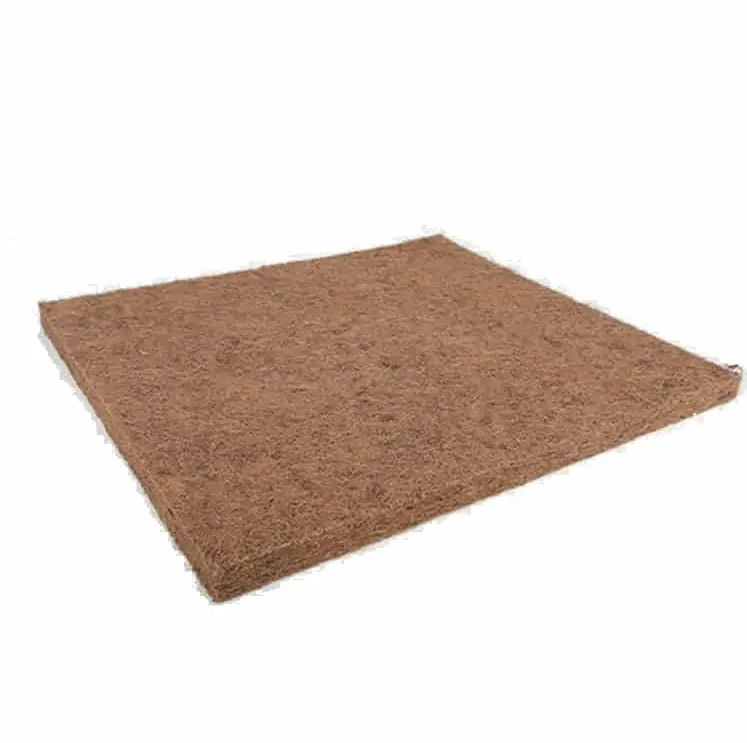
A CocoMat measuring 58cm x 51cm x 3cm made from coco fibres. CocoMat holds all the moisture required. Fill your tray just once and CocoMat will water the plants for up to ten days. The CocoMat controls watering by holding and gradually wicking the water to the plants via capillary action. Simply place your CocoMat into a tray, place Root Control Sheet on top if required (Root Control Sheet not included), fill the tray with water, place your seed tray on top and grow!
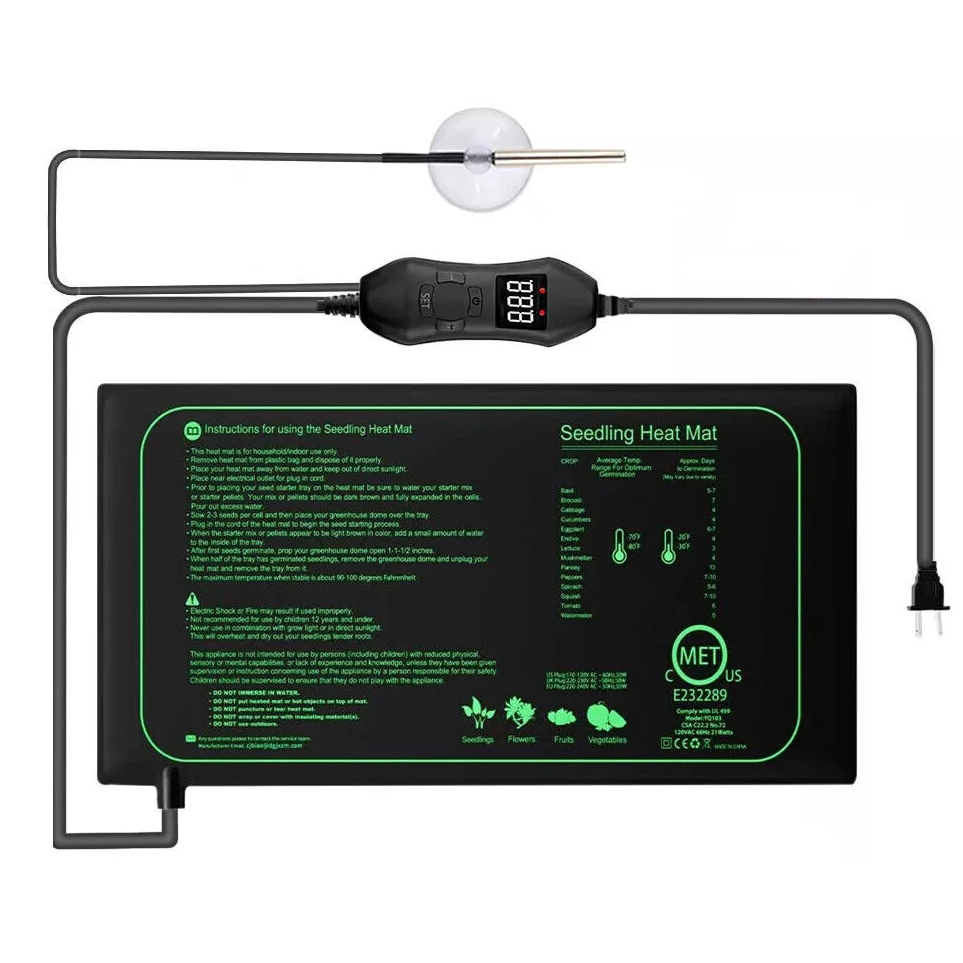
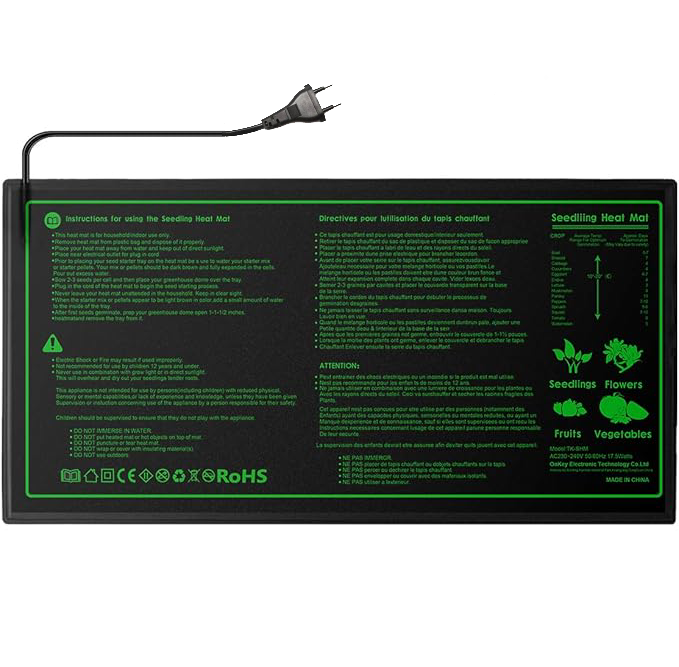
Heat Mat with Controller – With its 2-pin plug and integrated temperature controller and temperature sensor, this germination mat makes seed germination and cutting propagation quick and easy.
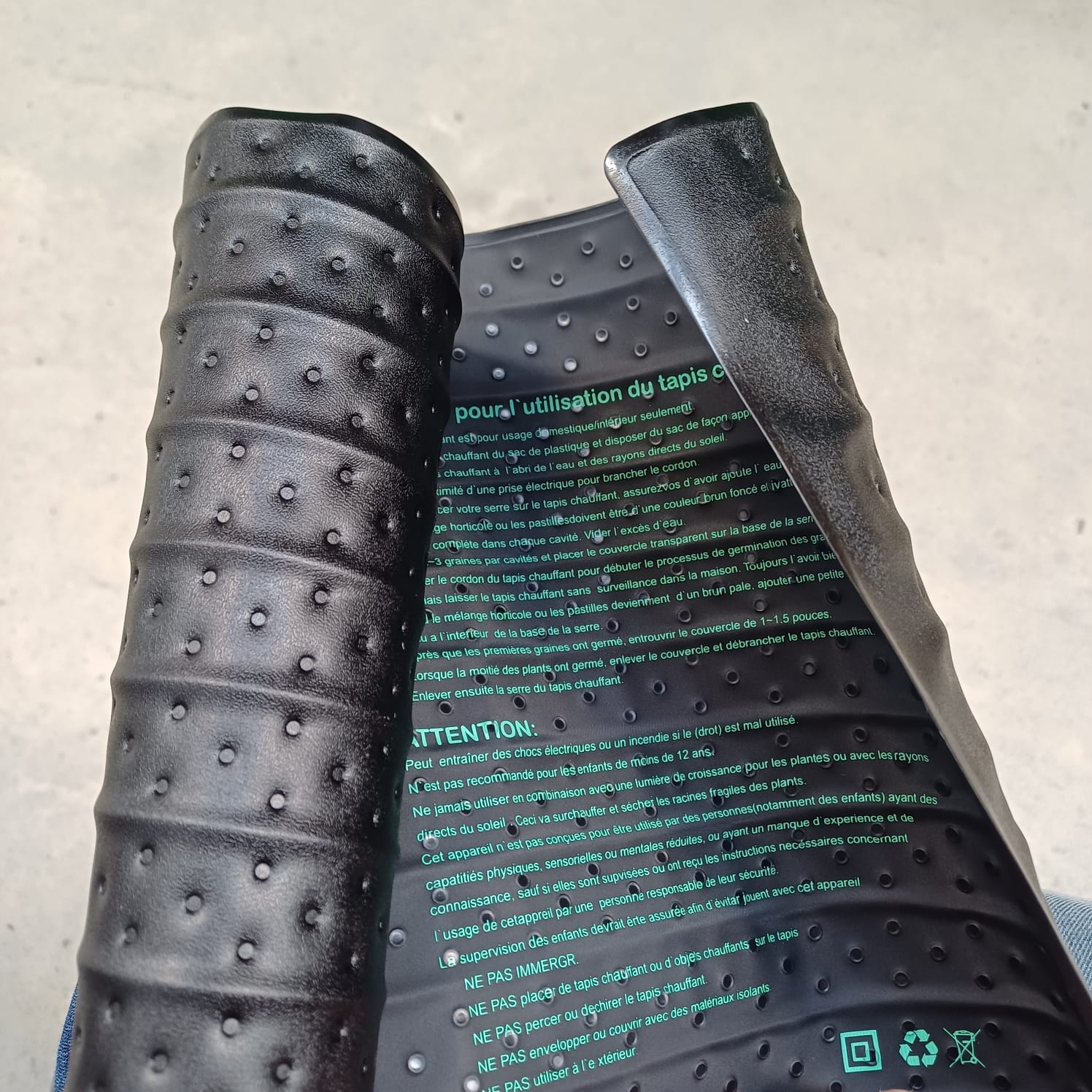
The black plastic material on this heat meat is softer and more pliable than a lot of other brands, and the heating element inside the mat heat ups quicker and feel much warmer to the touch than a lot of other mats!
Size: 25cm x 52.5cm
Wattage: 50W
Temperature range: 20 to 45 Celsius
PLEASE NOTE: The controller needs to be reprogrammed after being disconnected from mains power, or after power outages.
This 50W Heat Mat with Controller and sensor is the perfect tool for seed germination and rooting cuttings. Simply place the heat mat on a flat, dry surface and position your seed tray or propagation container on top. For best results, use a humidity dome to retain moisture and create an optimal environment. Insert the temperature sensor into the soil or rooting medium and set the controller to your desired temperature, typically between 21°C and 29°C for seeds or 24°C to 27°C for cuttings. The mat provides consistent, gentle warmth to encourage fast germination and robust root development. Regularly monitor and adjust the temperature as needed, and maintain proper moisture levels for healthy growth.
The 50W Heat Mat, despite its compact size, delivers significant heat output, making it a versatile tool beyond soil warming. In small, enclosed spaces like grow tents or propagation chambers, this high-output mat may help gently increase ambient temperatures when paired with a humidity dome, or installed in a smaller space, potentially creating a more favorable environment for rooting cuttings. While its primary function is to maintain consistent warmth at the root zone, some growers like to explore this optional use case to support overall plant health, as cuttings often respond well to slightly elevated air temperatures. Adjustments should always be made carefully to avoid overheating.
Budget Heat Mat 22W for Plant Propagation, (25cm x 52cm) with 2-pin plug.
Ensure your seeds and cuttings thrive with this 22W Heat Mat for Plant Propagation. Designed for indoor gardening enthusiasts and professional horticulturists alike, this heat mat provides consistent, gentle warmth to accelerate germination and rooting. The durable, waterproof construction ensures long-lasting performance, while the easy-to-clean surface makes maintenance a breeze.
PLEASE NOTE: Latest batch of stock has new mat design, as indicated below:
Key Features:
Powerful 22W Heating: Delivers steady, optimal warmth to seed trays and plant cuttings, promoting faster germination and healthy root development.
Even Heat Distribution: Ensures uniform heat across the mat’s surface, preventing hot spots and ensuring all plants receive the same care.
Waterproof and Durable: Built to last with waterproof materials, making it safe for use in humid greenhouse environments and easy to clean.
Energy Efficient: Low power consumption means you can keep your plants warm without a significant increase in energy costs.
Versatile Size: Ideal for a variety of applications, from small seedling trays to larger propagation projects with multiple mats.
Use Cases:
Seed Germination: Place your seed trays on the heat mat to provide a warm environment that speeds up the germination process, giving your seeds a strong start.
Cutting Propagation: Create the perfect conditions for cuttings to develop roots quickly by using the heat mat to maintain a consistent temperature.
Vegetable and Flower Seedlings: Ensure your vegetable and flower seedlings grow strong and healthy by providing a warm, nurturing environment from the start.
Elevate your plant propagation success with the Budget Heat Mat 22W, a reliable and efficient solution for all your indoor propagation needs.
Improving the process of rooting cuttings or germinating seeds can be significantly enhanced by adding a Heat Mat Temperature Controller to a heat mat. This combination allows for precise and consistent temperature regulation, creating an optimal environment for plant development. The controller automates temperature settings, ensuring that the heat mat maintains the ideal warmth without the need for constant monitoring, thus preventing overheating and fluctuations that can stress plants. This results in a more reliable and efficient propagation process, leading to healthier root development and faster germination, ultimately making plant propagation a smoother and more successful endeavor.
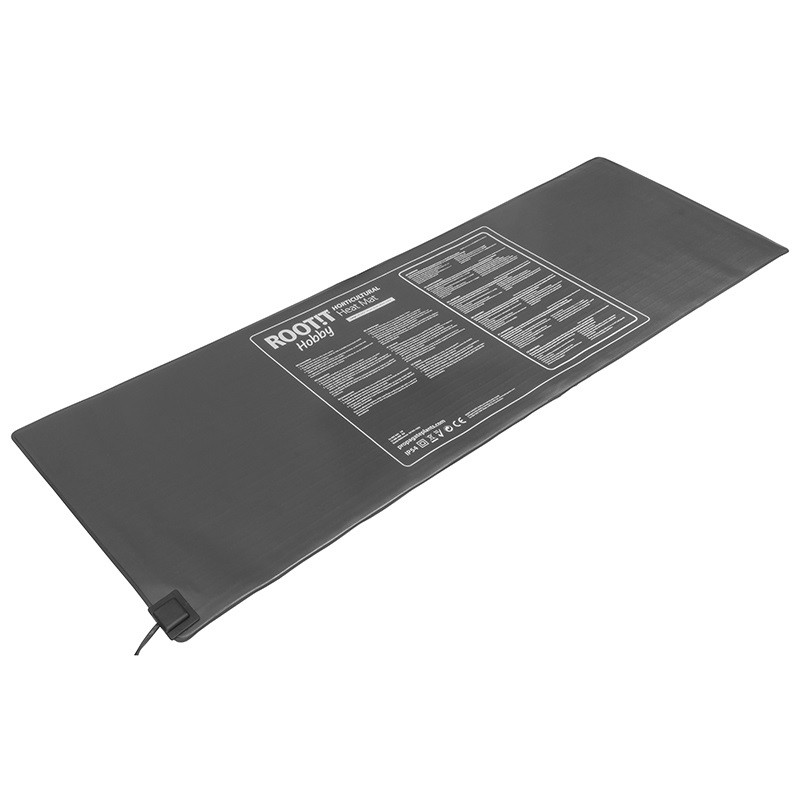
The ROOTiT Large Heat Mat will raise your propagator temperatures 10 to 15 °C above the ambient temperature. This will enable you to germinate and clone successfully during the colder times of the year and will also help you to sprout seeds that require higher temperatures to germinate.
ROOTiT Heat Mats produce a gentle heat, generated by the single mesh element encased inside a waterproof, fray-proof matting. Place the mat under a propagator or similar non-draining container, not inside of them. The mats’ surface temperate may however exceed 50 °C when turned on and should ideally be used with a temperature controller. Inserting a temperature controller’s waterproof temperature probe into the substrate used inside the propagator will enable you to regulate your substrate temperature automatically. Always try to match up your propagator size to your heat mat size. If the pad is larger than the propagator there will be heat loss on the exposed mat areas. If the pad is smaller than the propagator, the substrate will not be heated uniformly and/or adequately.
ROOTiT Large Heat Mat Specs:
Power cord: 1.8m, with 2 pin plug
Dimensions: 40 cm x 120 cm
Power draw: 60 W
Waterproof: NO
Fire or electrical shock may result form improper use
Do not place mat inside seed trays or cover with soil
Never submerge heat mat in water, or get it wet
Ensure unit is not plugged in during installation, handling, or removal.
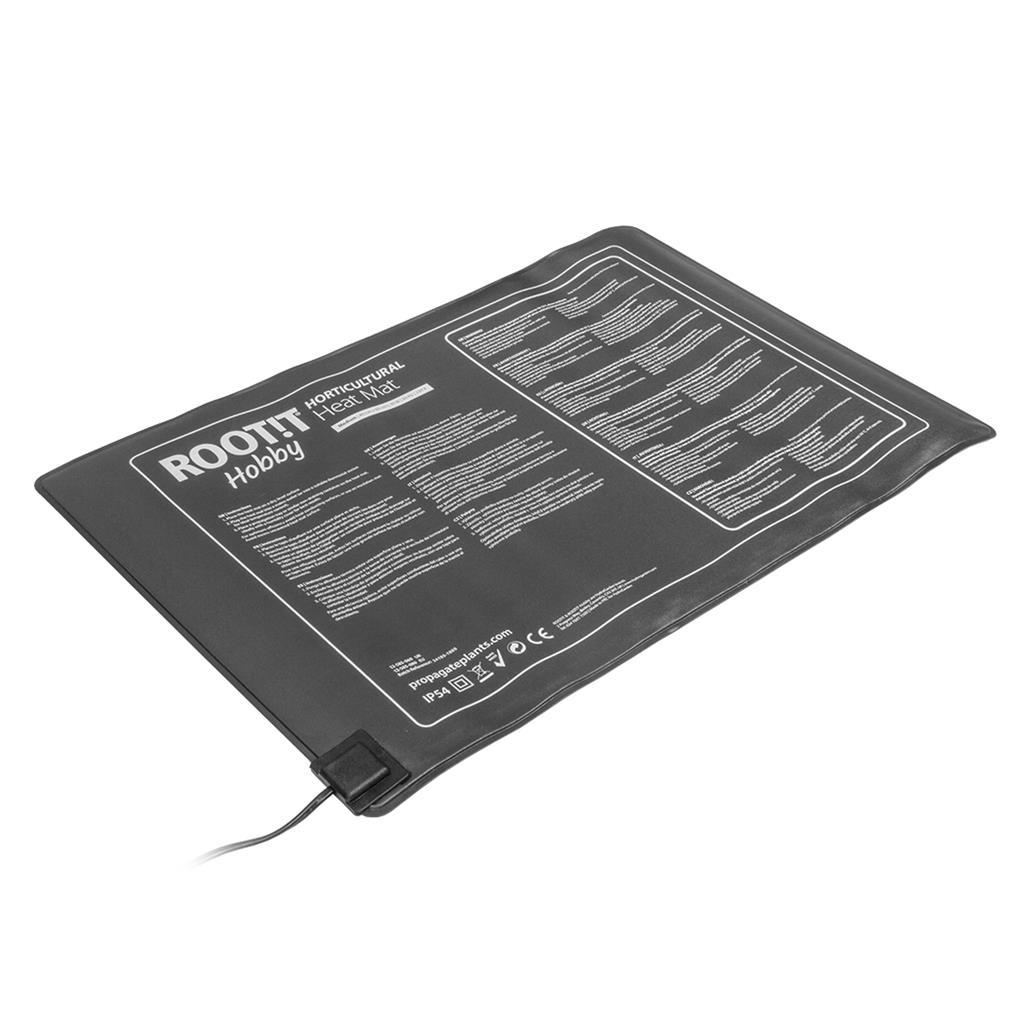
The ROOTiT Medium Heat Mat will raise your propagator temperatures 10 to 15 °C above the ambient temperature. This will enable you to germinate and clone successfully during the colder times of the year and will also help you to sprout seeds that require higher temperatures to germinate.
ROOTiT Heat Mats produce a gentle heat, generated by the single mesh element encased inside a waterproof, fray-proof matting. Place the mat under a propagator or similar non-draining container, not inside of them. The mats’ surface temperate may however exceed 50 °C when turned on and should ideally be used with a temperature controller. Inserting a temperature controller’s waterproof temperature probe into the substrate used inside the propagator will enable you to regulate your substrate temperature automatically. Always try to match up your propagator size to your heat mat size. If the pad is larger than the propagator there will be heat loss on the exposed mat areas. If the pad is smaller than the propagator, the substrate will not be heated uniformly and/or adequately.
ROOTiT Medium Heat Mat Specs:
Power cord: 1.8m, with 2 pin plug
Dimensions: 40 cm x 60 cm
Power draw: 30 W
Waterproof: NO
Fire or electrical shock may result form improper use
Do not place mat inside seed trays or cover with soil
Never submerge heat mat in water, or get it wet
Ensure unit is not plugged in during installation, handling, or removal.
The base (including lip edges) measures 32 cm x 21 cm, providing ample room for propagation. The ridged base raises seed trays and rockwool cubes from the bottom of the tray, allowing for drainage of excess water. The plastic thickness of the base is very similar to our Humidity Dome bases – thinner and more bendable than a hard plastic base (e.g. Garland Propagators) but still durable enough for light use over time.
The clear dome lid is also made of a very acceptable plastic thickness (not as thick and rigid as a Garland hard plastic dome top, yet ideal for light to moderate use over time) and feature a ventilation port on the top of the dome.
Set up your ROOTiT Small Propagator in conjunction with heat mats, temperature controllers, CFL lighting, etc., to create the perfect conditions for your seeds and cuttings to thrive in!
The ROOTiT Small Propagator can comfortably fit 2 x small seedling trays, e.g. 4 cell, 6 cell, 8 cell and 12 cell.
The base (including lip edges) measures 57 cm x 36 cm, providing lots of room for propagation. The ridged base raises seed trays and rockwool cubes from the bottom of the tray, allowing for drainage of excess water. The plastic thickness of the base is very similar to our Humidity Dome bases – thinner and more bendable than a hard plastic base (e.g. Garland Propagators) but still durable enough for light use over time.
The clear dome lid is also made of a very acceptable plastic thickness (not as thick and rigid as a Garland hard plastic dome top, yet ideal for light to moderate use over time) and feature two ventilation ports on the top of the dome.
Set up your ROOTiT Large Propagator in conjunction with heat mats, temperature controllers, CFL lighting, etc., to create the perfect conditions for your seeds and cuttings to thrive in!
The ROOTiT Small Heat Mat will raise your propagator temperatures 10 to 15 °C above the ambient temperature. This will enable you to germinate and clone successfully during the colder times of the year and will also help you to sprout seeds that require higher temperatures to germinate.
ROOTiT Heat Mats produce a gentle heat, generated by the single mesh element encased inside a waterproof, fray-proof matting. Place the mat under a propagator or similar non-draining container, not inside of them. The mats’ surface temperate may however exceed 50 °C when turned on and should ideally be used with a temperature controller. Inserting a temperature controller’s waterproof temperature probe into the substrate used inside the propagator will enable you to regulate your substrate temperature automatically. Always try to match up your propagator size to your heat mat size. If the pad is larger than the propagator there will be heat loss on the exposed mat areas. If the pad is smaller than the propagator, the substrate will not be heated uniformly and/or adequately.
ROOTiT Small Heat Mat Specs:
Power cord: 1.8m, with 2 pin plug
Dimensions: 25 cm x 35 cm
Power draw: 11 W
Waterproof: NO
Fire or electrical shock may result form improper use
Do not place mat inside seed trays or cover with soil
Never submerge heat mat in water, or get it wet
Ensure unit is not plugged in during installation, handling, or removal.
[tabs style=”default”] [tab title=”Welcome”]Welcome to hydroponic.co.za, online hydroponics supplier.
We provide secure online shopping with the largest range of hydroponic products and accessories. Our excellent customer service will help you on your journey into the world of hydroponics. Fresh herbs, vegetables and flowers are just a few clicks away.
We supply everything from hydroponic systems and nutrients to growing mediums and environment controls. Get growing today![/tab] [tab title=”Plant Basics”]HOW PLANTS GROW
We need to know how plants grow in soil in order to understand how hydroponics differs from soil. A plant has three main parts, namely the root system, the stem and the leaves. The root system anchors the plant in the soil and takes up water and nutrients from the soil.
The soil itself consists of 5% organic matter, which is plant remains and animal residues. These are broken down by bacteria to form humus, This mixture increases the water-holding capacity of the soil and fixes inorganic plant nutrients as well as being a source of nitrogen. The inorganic part of the soil, comprising 45% by volume, is made up of minerals released from broken-down rock particles, mainly sand and clay. This provides the chemical nutrients for plants. The remaining 50% of soil is made up in equal parts of water and air.
[/tab] [tab title=”Nutrients”]NUTRIENTS
You don’t have to worry about making up a nutrient solution of the major and trace elements, as there are ready-made mixtures on the market. We use a two-part nutrient, which, though a bit more trouble than single-part nutrients to mix, has given superior results without the sedimentation experienced with the single-part mixtures. A new solution should be made up once a week, throwing the old solution away into your garden. During the week top up the reservoir with plain water to replace any transpiration losses.
If you want to be more scientific, you can use an EC meter. This measures the total concentration of nutrients in the solution. There comes a time when your plants do not seem to be very happy, turning yellow or brown for no apparent reason. This may be caused by a deficiency in one of the mineral elements. While this may seem to be a contradiction if you are using a ready-made solution as mentioned above, in fact it isn’t, as plants may need more of a particular element at different times in their growth cycle. Although the different nutrient deficiency symptoms may look the same, there are small differences in each problem. It is by observation that the cause may be isolated.
[/tab] [tab title=”EC and pH”]EC AND PH
Before your eyes glaze over with all this science, it is necessary to have a working knowledge of pH. Although it sounds fearful, it is simply the relative acidity or alkilinity of a solution. In hydroponics we are interested in determining the pH level of water before nutrient is added to it, making adjustments if necessary, and then checking the pH level of the nutrient solution from time to time.
If we take a scale of 1 to 14, the centre point, or neutral position, is 7. Everything above neutral is alkaline and everything below is acid. To determine accurate pH levels, each whole number is divided into ten parts. Thus we have 6.8, 6.9, 7.0, 7.1, 7.2 and so on. When growing several kinds of vegetables or herbs in one unit, you will probably do best in the slightly acidic range of 5.6 to 6.5, as it is within this range that the nutrients are most available to the plants. To illustrate this, at 7.0, which is outside the most suitable range for vegetables, they will take up nitrogen, phosphorus and potassium, but only half of the trace elements such as iron, manganese, boron, copper zinc and molybdenum. So if the pH is above 7.0, look out for trace element problems, rather than those caused by lack of major elements.
[/tab] [tab title=”Growing Plants”]GROWING PLANTS
Now we come to the interesting part of hydroponics. You can grow almost anything in your unit; flowers for cutting, house plants for decoration, or vegetables and herbs to improve your meals. The only limitation is that root vegetables, such as potatoes and carrots need a different hydroponic system and will not have enough space in your unit. But it could also be argued that these vegetables do not suffer from long storage as much as vegetables like tomatoes, lettuce and green peppers, which thrive in your unit. So start with these and then experiment to your heart’s content as you go. We will discuss growing of specific plants later; the comments here apply to any plant you want to grow.
[/tab] [tab title=”Seeds”]SEEDS
When you select seeds for raising, bear in mind that commercial seed varieties have been bred for toughness and long shelf life in the supermarket at the expense of fragrance and flavour, so ask for seed varieties suited to home growing. For instance, you might like to grow a bush tomato instead of the vine type, which may grow too high! Leaf lettuce will yield a high volume of leaves in a few weeks, while head lettuce takes a bit longer. If you choose a head lettuce, such as “Great Lakes”, treat it like a leaf lettuce and simply pick the leaves for your salads. Don’t be afraid to experiment with hydroponics; use any seed that interests you.
You can plants seeds directly into your hydropopnic unit or, by using the growing medium supplied with your unit, which is equal parts of vermiculite and perlite, put them into seed trays from local nursery. You can soak the seek overnight in water for faster germination. Plant two seeds where you want one plant. If both come up, snip off the smaller one with scissors. Push your seeds gently into the growing medium no deeper than 1.5cm. Most seeds germinate best in darkness, warmth and moisture. Thus, you can cover your seeds with dark plastic sheet or use a humidity dome with a heating pad. For those seeds that germinate best in light, such as certain herbs, use clear plastic. Check every day for results. As soon as the first sprouts poke through the medium, take the cover off to let air and light get to the seedlings. Failure to remove the cover soon enough will make the seedlings “bolt” (grow long and spindly). If that happens you might as well pull them out and start again!
[/tab] [tab title=”Seedlings”]SEEDLINGS
If you have grown seeds in the hydroponic growing medium in a seed tray, all you have to do is transfer them, with the growing medium clinging to their roots, to the unit. There should be no shock, drooping or wilting. They will just continue growing! When you insert the seedling into the growing pot, don’t be afraid to put the roots and the stem up to the first set of leaves into the pot. Ideally, the roots should just protrude into the nutrient channel. If you have been impatient to get started and bought seedlings in soil from your local nursery, that is O.K!
You will have to wash the roots gently to remove the soil. Use cold water running steadily from a tap. The water will help to loosen the soil and the coldness will have an anaesthetising effect on the plant to minimise the shock. Then feed the roots into the growpot so that they stick out of the bottom of the pot. Place one hand under the pot and with the other hand put in the dry mixture by holding the pot under a gently-running tap. The mixture will not now come out of the bottom of the pot. Be warned that there may be some wilting or drooping initially and some plants may even lose some leaves, but you will see the new growth will appear within a few days. Whether you have used hydroponically raised seedlings or those raised in soil, be gentle with the roots.
[/tab] [tab title=”Cuttings”]CUTTINGS
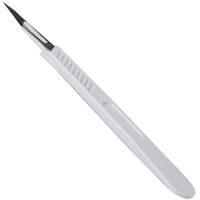
Any plants that will normally root from cuttings can be placed directly into your growing pots. To make the cutting, use a sterile scalpel blade and cut a section of the plant that has at least 3 internodes diagonally down. Clean the leaves from the last 50mm of the stem and coat with a rooting hormone and place in your growing medium.
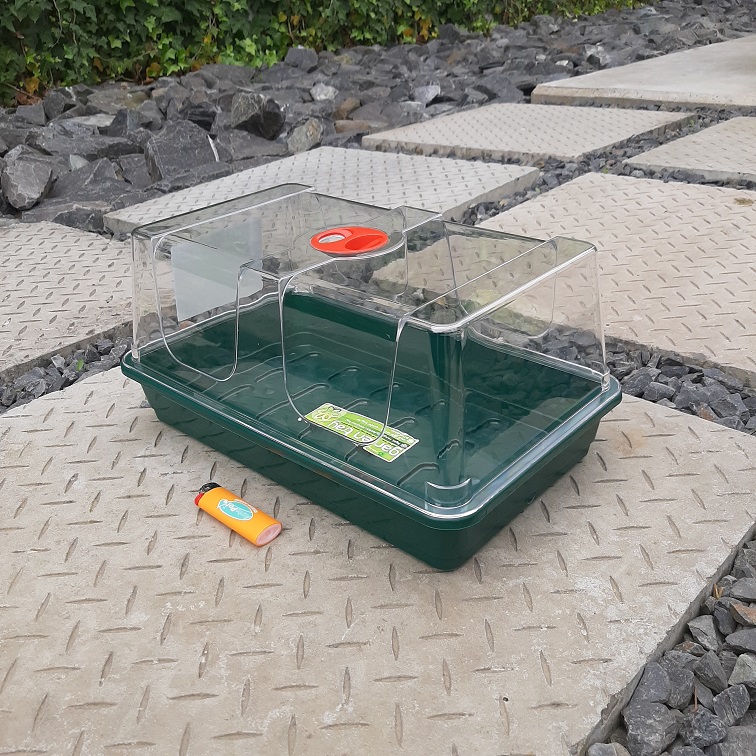
Garland Large High Dome Propagator is a very popularly sized unit using a standard seed tray as a base designed by Garland. The base does not have drainage holes, and the cover features an easy to adjust ‘dial’ ventilationhole.
The lid is Injection molded in crystal clear shatter resistant material. The Garland Large Dome Propagator is an unheated high dome propagator which is perfect for cuttings because of the high dome.
Dimensions – 37.5cm (l) x 23cm (w) x 18cm (h)
This is a Premium range of propagation, all made from high quality recycled plastics. These items are super strong and durable, with thicker wall sections offering extra rigidity.. The trays are easy to clean and can even be put in a dishwasher. Although injection molded trays are generally more expensive than vacuum formed equivalents, they will easily last for 10 years or more.
Tony Hinde provided this quick introduction into how hydroponics works, all aspects around growing plants from seed or seedling in a hydroponic system and common problems encountered.
More extensive guide to hydroponics .
HOW PLANTS GROW
We need to know how plants grow in soil in order to understand how hydroponics differs from soil. A plant has three main parts, namely the root system, the stem and the leaves. The root system anchors the plant in the soil and takes up water and nutrients from the soil.
The soil itself consists of 5% organic matter, which is plant remains and animal residues. These are broken down by bacteria to form humus, This mixture increases the water-holding capacity of the soil and fixes inorganic plant nutrients as well as being a source of nitrogen. The inorganic part of the soil, comprising 45% by volume, is made up of minerals released from broken-down rock particles, mainly sand and clay. This provides the chemical nutrients for plants. The remaining 50% of soil is made up in equal parts of water and air.
Air is essential for the supply of oxygen to the roots of a plant. The stem connects the roots and the leaves. It is responsible for getting water and nutrients from the roots to the leaves. The leaves, in the sunlight, turn carbon dioxide and water from the atmosphere into chlorophyll. This is the green substance which is the source of energy to help the plant grow. Another function of the leaves is to act as an air-conditioner to cool the plant on a hot day. Now we come to the common denominator between growing in soil and hydroponics, which is the availability of mineral elements. These are absorbed by the plant from the soil (or nutrient solution in hydroponics) and are essential for the growth of the plant.
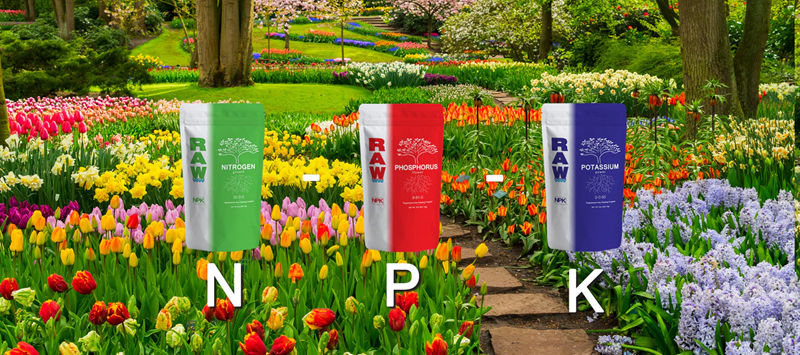
There are six major elements and six trace elements. The major elements are nitrogen, phosphorus, potassium, calcium, magnesium and sulphur. The trace elements are iron, mangenese, boron, copper, zinc and molybdenum. There are other trace elements, but they do not have any effect on plant growth. We don’t want to frighten you with too much science, but it is important that you have the basics. An interesting fact is that the mineral elements mentioned above form only about 2% by weight of a tomato fruit, with 95% made up of water!
NUTRIENTS
You don’t have to worry about making up a nutrient solution of the major and trace elements, as there are ready-made mixtures on the market. We use a two-part nutrient, which, though a bit more trouble than single-part nutrients to mix, has given superior results without the sedimentation experienced with the single-part mixtures. A new solution should be made up once a week, throwing the old solution away into your garden. During the week top up the reservoir with plain water to replace any transpiration losses.
If you want to be more scientific, you can use an EC meter. This measures the total concentration of nutrients in the solution. There comes a time when your plants do not seem to be very happy, turning yellow or brown for no apparent reason. This may be caused by a deficiency in one of the mineral elements. While this may seem to be a contradiction if you are using a ready-made solution as mentioned above, in fact it isn’t, as plants may need more of a particular element at different times in their growth cycle. Although the different nutrient deficiency symptoms may look the same, there are small differences in each problem. It is by observation that the cause may be isolated.
Nitrogen Small, stunted plants with very large root systems; leaves smaller and lighter in colour than normal; slow growth. Paleness will start at the tips of the lower leaves. If this deficiency continues, the foliage will continue to develop, but stems will be spindly, sappy and soft, flowering will be delayed, small fruit will grow and the plant will become more susceptible to disease.
Phosphorus Stunted plants with dark, dull and sometimes discoloured leaves, unusually hard stems, poor root system and very little branching. Attacks lower, more mature leaves first. Occurs especially when nitrogen level is low.
Potassium In early stages, yellowing and curling of older leaves. Newer leaves will begin to droop. Older leaves then become blotchy and scorched. Flowers are lacklustre and stems are soft. The plant will be more susceptible to diseases such as mildew and rust.
Calcium Underdeveloped roots are the first to be affected. Younger leaves will be immobile and their edges will curl. Plants will be stunted and have dark crinkly leaves. (See blossom end rot under diseases.)
Magnesium Symptoms do not appear until the deficiency is well established. The plant will be stunted. Leaf veins will stay green while the remainder of the leaf turns yellow. Brown spots will appear and then the plant will dry out. Flowers will be slow to develop, if at all. Flowers that do grow will be lack lustre.
Sulphur Resembles nitrogen deficiency in many ways. Iron Tips of new leaves will become either pale or yellow, and this will spread inward. The leaf will likely turn blotchy from a lack of green pigment, eventually turning brown and drying out. Manganese Poor blooming, weak growth. Leaves may turn yellow or blotchy.
Boron Brittle stems and immobile new leaves with brown tips.
Zinc Growth will be stunted. You may never encounter any of these imbalance problems, but it is as well to be aware of them. If they do occur, one of the ways to remedy the situation is to give the plant a foliar feed of nutrient solution, using a very fine spray.
HYDROPONICS AND pH
How pH affects nutrient uptake
Before your eyes glaze over with all this science, it is necessary to have a working knowledge of pH. Although it sounds fearful, it is simply the relative acidity or alkilinity of a solution. In hydroponics we are interested in determining the pH level of water before nutrient is added to it, making adjustments if necessary, and then checking the pH level of the nutrient solution from time to time.
If we take a scale of 1 to 14, the centre point, or neutral position, is 7. Everything above neutral is alkaline and everything below is acid. To determine accurate pH levels, each whole number is divided into ten parts. Thus we have 6.8, 6.9, 7.0, 7.1, 7.2 and so on. When growing several kinds of vegetables or herbs in one unit, you will probably do best in the slightly acidic range of 5.6 to 6.5, as it is within this range that the nutrients are most available to the plants. To illustrate this, at 7.0, which is outside the most suitable range for vegetables, they will take up nitrogen, phosphorus and potassium, but only half of the trace elements such as iron, manganese, boron, copper zinc and molybdenum. So if the pH is above 7.0, look out for trace element problems, rather than those caused by lack of major elements.
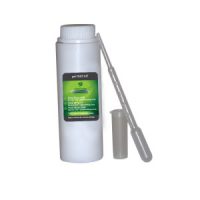
There are two simple methods of determining pH level, namely litmus paper or pH indicator solution. It is unlikely that the pH of your water supply will fluctuate, but if it does, a check of the pH level every two or three days may be necessary; otherwise, once a week should be enough. Many areas have a water pH of 7.0 to 8.2. Your nutrient powder will probably affect this, bringing it down close to the desired 5.6 to 6.5. If you change your nutrient solution regularly, say every week, pH shouldn’t be a problem. The other factors which may affect pH are the hardness of the water, which can be ascertained by getting an analysis from your local council, climate, what plants you are growing and how much nutrient each plant uses.
However, having said that, it is not necessary to get in a lather over pH, as you will still get decent crops! It is just interesting to experiment with different conditions. If your pH is too alkaline, add pH Down Nitric or pH Down acid. The amount to be used should measured in single drops only! Check the pH level every eight hours. If your pH is too acidic, add pH Up to your solution.
Certain vegetables have specific preferences. For example, lettuces like 6.0 to 7.0 and tomatoes prefer 5.5 to 7.5. When growing combinations of vegetables, a good pH range is 5.6 to 6.5. For Herbs only it is 5.6 to 7.0. If you are growing vegetables and herbs together try to maintain a pH of 6.0 to 6.5. Have a look at this chart for detailed information on the correct pH/EC/ppm for a variety of plants grown using hydroponics.
Now we come to the interesting part of hydroponics. You can grow almost anything in your unit; flowers for cutting, house plants for decoration, or vegetables and herbs to improve your meals. The only limitation is that root vegetables, such as potatoes and carrots need a different hydroponic system and will not have enough space in your unit. But it could also be argued that these vegetables do not suffer from long storage as much as vegetables like tomatoes, lettuce and green peppers, which thrive in your unit. So start with these and then experiment to your heart’s content as you go. We will discuss growing of specific plants later; the comments here apply to any plant you want to grow.
SEEDS
When you select seeds for raising, bear in mind that commercial seed varieties have been bred for toughness and long shelf life in the supermarket at the expense of fragrance and flavour, so ask for seed varieties suited to home growing. For instance, you might like to grow a bush tomato instead of the vine type, which may grow too high! Leaf lettuce will yield a high volume of leaves in a few weeks, while head lettuce takes a bit longer. If you choose a head lettuce, such as “Great Lakes”, treat it like a leaf lettuce and simply pick the leaves for your salads. Don’t be afraid to experiment with hydroponics; use any seed that interests you.
You can plants seeds directly into your hydropopnic unit or, by using the growing medium supplied with your unit, which is equal parts of vermiculite and perlite, put them into seed trays from local nursery. You can soak the seek overnight in water for faster germination. Plant two seeds where you want one plant. If both come up, snip off the smaller one with scissors. Push your seeds gently into the growing medium no deeper than 1.5cm. Most seeds germinate best in darkness, warmth and moisture. Thus, you can cover your seeds with dark plastic sheet or use a humidity dome with a heating pad. For those seeds that germinate best in light, such as certain herbs, use clear plastic. Check every day for results. As soon as the first sprouts poke through the medium, take the cover off to let air and light get to the seedlings. Failure to remove the cover soon enough will make the seedlings “bolt” (grow long and spindly). If that happens you might as well pull them out and start again!
If you have different seeds in the same tray, some may germinate faster than others. Just fold or cut the cover as needed. Some seeds come up fast (basil, cucumbers); others are quite slow (parsley, peppers). Identify what you have sown with plant markers. Use a waterproof felt pen or pencil so that the writing won’t wash off. If your seeds don’t sprout, there are five possible reasons: – The seed tray is too cold for them (less than 13 degrees Centigrade). – You have bought old seed that is no longer fertile. Check the “sell-by” date on the package. – Your seeds were not treated for fungus resistance and have been eaten by the fungus. You’ve put your seeds under the germination cover, placed them in the hot sun and cooked them. Keep the tray out of direct sunlight. – The seeds have come from sterile hybrids. This might happen if you saved seed, e.g. tomato, from a fruit that you bought at the supermarket.
SEEDLINGS
If you have grown seeds in the hydroponic growing medium in a seed tray, all you have to do is transfer them, with the growing medium clinging to their roots, to the unit. There should be no shock, drooping or wilting. They will just continue growing! When you insert the seedling into the growing pot, don’t be afraid to put the roots and the stem up to the first set of leaves into the pot. Ideally, the roots should just protrude into the nutrient channel. If you have been impatient to get started and bought seedlings in soil from your local nursery, that is O.K!
You will have to wash the roots gently to remove the soil. Use cold water running steadily from a tap. The water will help to loosen the soil and the coldness will have an anaesthetising effect on the plant to minimise the shock. Then feed the roots into the growpot so that they stick out of the bottom of the pot. Place one hand under the pot and with the other hand put in the dry mixture by holding the pot under a gently-running tap. The mixture will not now come out of the bottom of the pot. Be warned that there may be some wilting or drooping initially and some plants may even lose some leaves, but you will see the new growth will appear within a few days. Whether you have used hydroponically raised seedlings or those raised in soil, be gentle with the roots.
CUTTINGS
Any plants that will normally root from cuttings can be placed directly into your growing pots. To make the cutting, use a sterile scalpel blade and cut a section of the plant that has at least 3 internodes diagonally down. Clean the leaves from the last 50mm of the stem and coat with a rooting hormone and place in your growing medium.
If you want to use your unit as a hobby, plant whatever interests you and don’t be afraid to experiment. If you want to grow crops for your table it may be advisable to stick to salad vegetables. Notes on a few of the more popular vegetable crops and their requirement follows:
Cucumbers If you don’t wish to cross-pollinate, plant the English or seedless variety. They like hot weather and direct sunlight and are sometimes susceptible to mildew. They can be trained upwards and then laterally, using twine as a support. The crop then hangs downwards.
Lettuce Grow either the heading variety, such as “Great Lakes”, or a leaf lettuce or “cos” lettuce. Although it is a cool weather crop, it can be grown throughout the year if shade is used during the summer months. It prefers a temperature of between 13 and 24 degrees Centigrade.Germination takes about 10 days and you should have leaves to harvest in six to eight weeks. If you want a continuous supply of lettuce, you should stagger planting.
Tomato This is a most popular and rewarding plant to grow. It loves the sun and prefers a temperature range of 21 to 27 degrees Centigrade. When the plant has two pairs of leaves in addition to the seed leaves, it can be transplanted from the seed tray into the unit. At this stage you should make arrangements for supporting the plant. We have used twine, attached to the shade support quite successfully. You should get a crop about 12 weeks from planting seed. Experiment with different varieties. The small cocktail varieties are particularly sweet. It should be remembered that certain plants either like or dislike growing in close proximity, so it is as well to keep “friends” together and “enemies” apart. Examples of “friends” are tomatoes and parsley or lettuce and cucumber. However, tomatoes do not like cabbages, but it is highly unlikely that you will be growing those at the same time anyway! Cucumbers and sage should be kept apart. When growing combinations of vegetables, the pH should be 5.6 to 6.5.
GROWING FLOWERS
Flowers are very rewarding in any garden, and no less so in your unit. The carnation is always a favourite. It likes a pH of 6.0 to 6.5, but requires a fair amount of attention to be successful. Antirrhinums or Snapdragons will grow for many months of the year at a pH of 6.0. Experiment with Sweet Peas, Marigolds, Zinnias and anything else that takes your fancy. Just remember that flowers also have “friends” and “enemies”. These can be found in any good gardening book.
GROWING HERBS
There is nothing more satisfying than being able to enliven your cooking with fresh herbs. The main herbs for cooking include Basil, Marjoram, Sage, Parsley, Oregano and Thyme. The difference between using dried and fresh herbs is unbelievable! Herbs can be grown from seed, or you can obtain cutting from friends. Their pH requirements vary, but not markedly. For example, parsley grows best from 5.0 to 7.0, while thyme prefers a pH of between 5.5 and 7.0. A good range for herbs only is 5.6 to 7.0. If you are growing vegetables and herbs together, aim for between 6.0 and 6.5. Quite apart from the culinary uses, herbs are known for their medicinal properties, but that is another topic altogether!
GENERAL HINTS
Housekeeping The pump should be cleaned at least weekly. The impeller can be accessed by pulling off the front of the pump, Do a daily check to see that the 5mm feeder pipes are clear and that the flow in the gullies is in contact with the roots of the plants, not wandering all over the place! The initial setting of the pump is 300l/h. You can increase this as the plants grow, and if you feel that the flow is insufficient. As a rule of thumb, the flow should be about 1-2 litres per minute. Keep your unit and its plants clean. Remove dead leaves before they rot, to avoid any fungal infection.
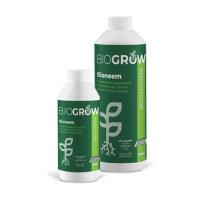
Pests Watch out for insects, such as red spider mite and aphids. You can use commercial insecticides, but if you don’t like using them, a general organic spray that you can make yourself is as follows: Chop 90 grams of garlic cloves in a grinder or blender and soak for 24 hour in 2 tablespoons of mineral oil. Dissolve 15 grams of oil-based soap in 500ml of water and add to the garlic mixture. Stir well and use in your hand sprayer. Alternatively, there is a natural insecticide called “Neem”, which is derived from the Indian neem tree.
Record-keeping Although you may not like the idea, it is worthwhile to keep a log of your day to day activities (hydroponically speaking of course). Record the pH when checked, when you changed the nutrient solution, the weather and light conditions, when seeds were planted, when they germinated, when they were transplanted, when they, start fruiting, when and how much you harvested. Anything that will add to your knowledge later can be noted. If you have problems, this may help you find solutions.
TROUBLE-SHOOTING
This section is intended to give you some idea of what to do if your plants do not seem to be as healthy as they could be. The problem with such a section is rather like reading a medical book containing symptoms of various diseases; you seem to have them all!
Bolting of lettuce Lettuce is a cool weather crop and will bolt if it is too hot or if it doesn’t get enough light from germination to maturity. Give it plenty of light early on, but keep in a cool shady place after partial maturity. Use 40% shade cloth.
Damping off This disease is also called root rot, although damping off applies more to seeds and root rot to plants. It is a fungus disease caused by a variety of fungi. It strikes seeds, which will turn mildewy and fail to grow. It may be due to the fact that your unit is in a place that keeps it too damp, dark and cool. In plants, the roots turn brown and rot. One answer is an all-purpose fungicide.
Drooping leaves Check to see that your plants are getting enough water. Check that the pump is operating correctly. If these are all right it is possible that your nutrient concentration is too high. Flush the system and run on plain water for a couple of days, then use the nutrient again. Make sure that there is a good circulation of air around the unit and that it is not too hot.
Limp Lettuce When they are grown in the sun, lettuce leaves are sometimes too limp to serve. They will crisp up nicely for your salad if you wash them in cold water, shake gently and put them in a plastic bag in the refrigerator for an hour before using.
Overfeeding This is a common mistake, and burns the plants. It is safer to run nutrient on the lean side. If the plants get too little nutrient, you will know they need more because the veins of their leaves will turn yellow or pale. Just add a pinch of nutrient powder and they’ll turn green again almost overnight.
Rain overflow If a heavy shower should cause your reservoir to overflow, it is best to throw away the solution and prepare a fresh one. Light rain will have little effect on the solution.
Spindly growth This is caused by insufficient light.
Sunburn White, bleached-looking patches appear on the leaves. Plants such as tomatoes and cucumbers need a 30% shade cloth, while lettuces do best with 40% shade cloth. Tip burn The tips or margins turn brown. This is caused by overfeeding. Flush the system and make up a new batch of nutrient solution.
Yellow leaves When a vegetables is nearing the end of its fruitful life, its older leaves will usually turn yellow and die. This is normal. When younger leaves yellow or turn a distinctly lighter green than older leaves, try adding a pinch of nutrient. Wait a few days and they’ll turn green again. If not, add a little more.
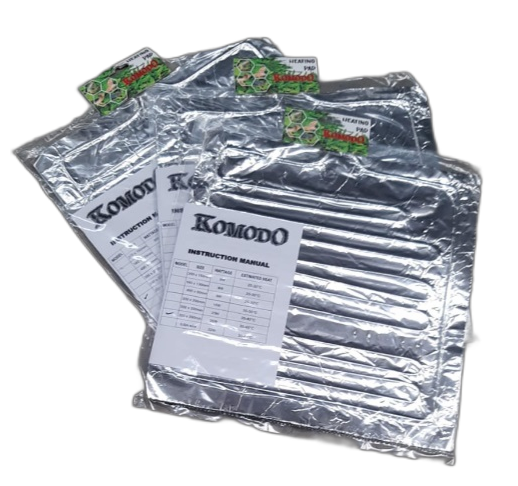
The heating pad creates perfect conditions for all types of propagation: Flexible warmth, where you need it. Helps overwintering of frost tender plants.
Applying heat to the bottom of a flat as the seeds germinate will increase your success and ensure a healthy root system. YOU WILL NEED SOME INSULATION BETWEEN THE HEATING PAD AND THE SEEDLING TRAYS, if not using a temperature controller. If no controller is present, use a thermometer inside one of the soil filled seedling tray cells and adjust insulation until desired soil temp is achieved.
A heating Pad will ensure that your seeds have a constant steady temperature. This results in faster and also more even germination. Chili plants, peppers, sweet peas and many more need at least 19°C soil temperature and above to germinate. If your home is cold or you have an unheated greenhouse, then it will heat just the seed trays and you won’t face a bill for heating the whole room. It also allows you to extend the sowing season. They can be used to help cuttings strike, and you can utilize the mats to overwinter tender specimens.
Please note: the heating pad requires a standard plug to be fitted.
Size: 35cm X 35cm
Watts: 25W
Surface Temperature: +/- 35 to 40 degrees Celsius
Voltage: 220V – 240V
We use cookies to ensure that we give you the best experience on our website. If you continue to use this site we will assume that you are happy with it. Privacy policy