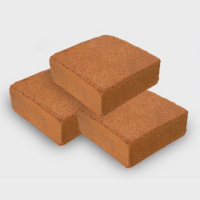
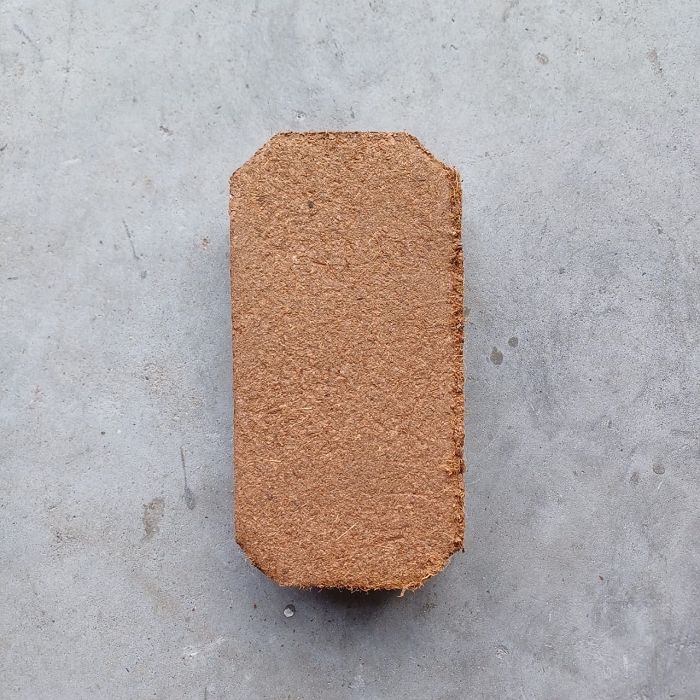
600g Coco Peat Bricks
R50.00
A sustainable, ready-when-you-are peat alternative. 600g Coco Peat Bricks are a clean substitute for peat — free of bacteria and most fungal spores and sustainably produced, without the environmental damage of peat mining.
- Eco-friendly: a renewable coir product that spares peat bogs.
- Clean start: free of bacteria and most fungal spores.
- Make your own mix: blend with sand, compost and fertiliser for good-quality potting soil.
- Reusable: can be re-used up to three times with little loss of yield (never re-use coco from diseased plants).
One 600g brick makes about 6L when expanded (600g weight is approximate). Natural pH range approximately 5.5–6.5. Important: regular (washed) coco peat bricks must be buffered with Calcium Magnesium Nitrate (Cal Mag) and then flushed/rinsed before use — otherwise added calcium displaces sodium and potassium in the coco, which can then reach the roots.
In stock
Description
600g Coco Peat Bricks… Coco peat bricks is a substitute for peat, because it is free of bacteria and most fungal spores, and is sustainably produced without the environmental damage caused by peat mining. It can be be mixed with sand, compost and fertilizer to make good quality potting soil.
Coco peat (coco coir) generally has an acidity in the range of pH – 5.5 to 6.5. It is a little on the acidic side for some plants, but many popular plants can tolerate this pH range.
Coco peat can be re-used up to three times with little loss of yield. Coco peat from diseased plants should not be re-used.
One x 600g brick makes about 6L. Please note that 600g weight is approximate.
Please note that you need to buffer the regular Coco peat bricks (washed coco) with
Calcium Magnesium Nitrate (Cal Mag) and then flush/rinse before using.
Cocopeat, pressed into Coco peat bricks, has a negatively charged complex, surrounded by a couple of positively charged ions: sodium and potassium. Because these elements stick to the complex, like iron to a magnet, there is no danger to the plant root initially. The problem starts when fertilizing with calcium. The calcium will push the potassium and sodium aside and take their position. Consequently, the calcium that is connected to the complex won’t be available to the plant, while sodium and potassium that are released into the water will be available.
To avoid this ‘time bomb’ problem, the Cocopeat needs to be buffered. In buffered cocopeat the ion exchange, as we call the process where calcium pushes the other ions off the complex, has already taken place.