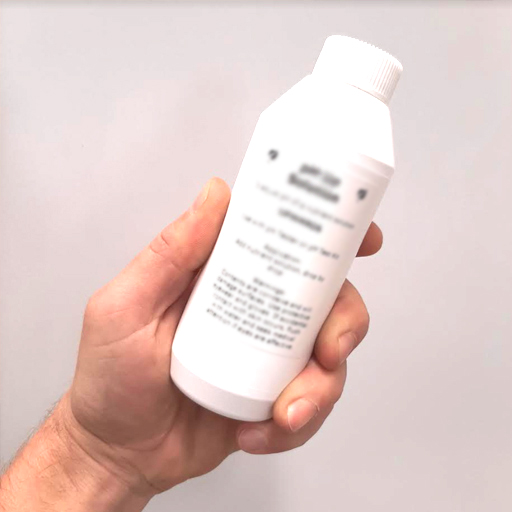
EC Calibrating Solution 2.8
R50.00
Keep your EC pen honest with the right standard. EC Calibrating Solution 2.8 is for use with the Essentials EC Pen — because meters must be periodically calibrated against a standard solution to avoid serious errors when measuring total dissolved solids or conductivity.
- Accurate readings: calibrate periodically to prevent serious errors in TDS/conductivity measurement
- Right standard: use a solution containing the same type of salts as what you’re testing (check your pen’s instructions)
- Better technique: shake excess water off the probe and tap/stir to clear air bubbles before reading
- Longer probe life: rinse the probe under running water after each test to avoid salt build-up
EC 2.8 standard calibration solution for the Essentials EC Pen. Hold the meter upright with the probes suspended near the centre of the sample; the longer the probe is in the water, the more accurate the reading.
Description
EC Calibrating Solution 2.8 to be used with the Essentials EC Pen
When using a meter to measure either the ppm of total dissolved solids or conductivity of a liquid, it is necessary to periodically calibrate the meter using a calibration standard solution. Although the basis for testing EC of total dissolved solids is the conductivity of the solution, it is not correct to assume that this measurement is absolute.
It is always necessary to calibrate all total dissolved solids meters with a parts per million total dissolved solids standard calibration solution that contains the same type of salts or mixtures of salts as the solution to be tested. Failure to do this will result in serious errors in the measurement of total dissolved solids.
Refer to Digital Pen instructions for type of calibrating solution required.
HOW CAN I GET THE BEST READING
SHAKE:
Always make sure to shake excess water off the probe before dipping it into a water sample, even if it’s the same water.
STIR / TAP:
After dipping probe in the water, always lightly tap it against the side and stir the meter to remove any lingering air bubbles.
POSITIONING:
When taking the reading, always make sure to hold the meter straight up without it touching the sides or bottom of the glass/beaker/cup. The probes should be suspended as close to the center of the water sample as possible. In-line meter probes need to be positioned in the tee so that the water will flow between the two metal prongs, not against them.
TIME:
The longer the probe is in the water, the more accurate the reading will be.
RINSE:
If switching between very low and very high EC water, always rinse the probes with water to avoid any build-up. Rinse probe under running water after each rest to avoid salt buildup on Probe.
Related products
-

Bluelab EC Calibrating Solution 2.77
R295.00 – R380.00 Select options This product has multiple variants. The options may be chosen on the product page -
Bluelab pH 4.0 Calibration Solution
R380.00 Select options This product has multiple variants. The options may be chosen on the product page -
Bluelab Probe Care Kit – pH
R500.00 Add to cart